
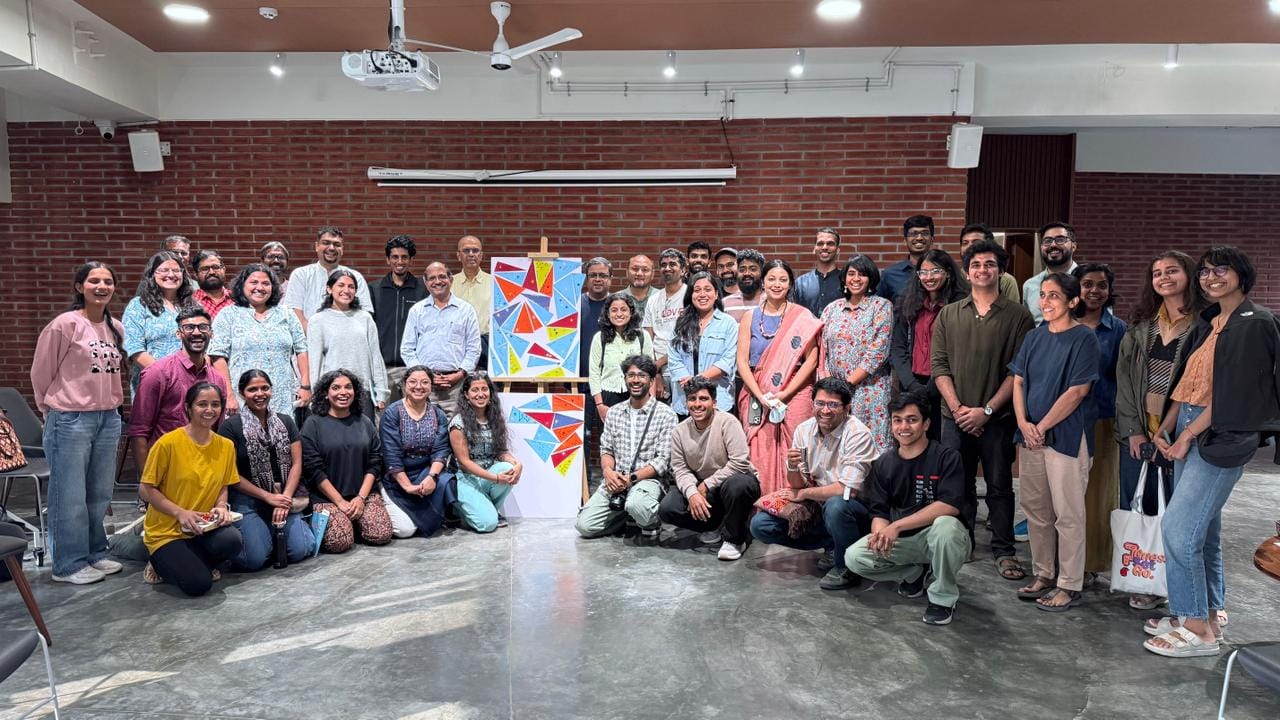
A FOSS developer, a Physics graduate, and a Science educator talk about community building
Apart from FOSS and Digital Commons, basic science is what Kailash and I discuss the most, and that's how I got involved in an ongoing conversation with Mathura about starting a new community to make the sciences open and accessible. Things snowballed pretty quickly over the first few weeks of November 2025 as we settled upon what we expected out of this new community, how we could imbue our existing learnings about community organizing into this new endeavour, and what vacuum we could specifically address in the science appreciation, communication, and education space. And the most important thing of all - a date. Kailash has a knack for names and dates, suggesting January 3rd, 2026 as the date for our first event, and we immediately pulled together a few more volunteers and got to work planning the event.
After what felt like an eternity planning the event and coordinating with the numerous people we invited to participate, we're incredibly happy with how the day turned out. If you've organized an event, you know how unreliable registration numbers usually are - anywhere from 25% to 90% of registered participants show up for the actual event, so we were hyped by the actual turnout on the day of the event! The day, and subsequent interest and conversations with the scientific community, make us feel like we've nailed the niche where we could do some good, and an event format that the community found valuable.
The day
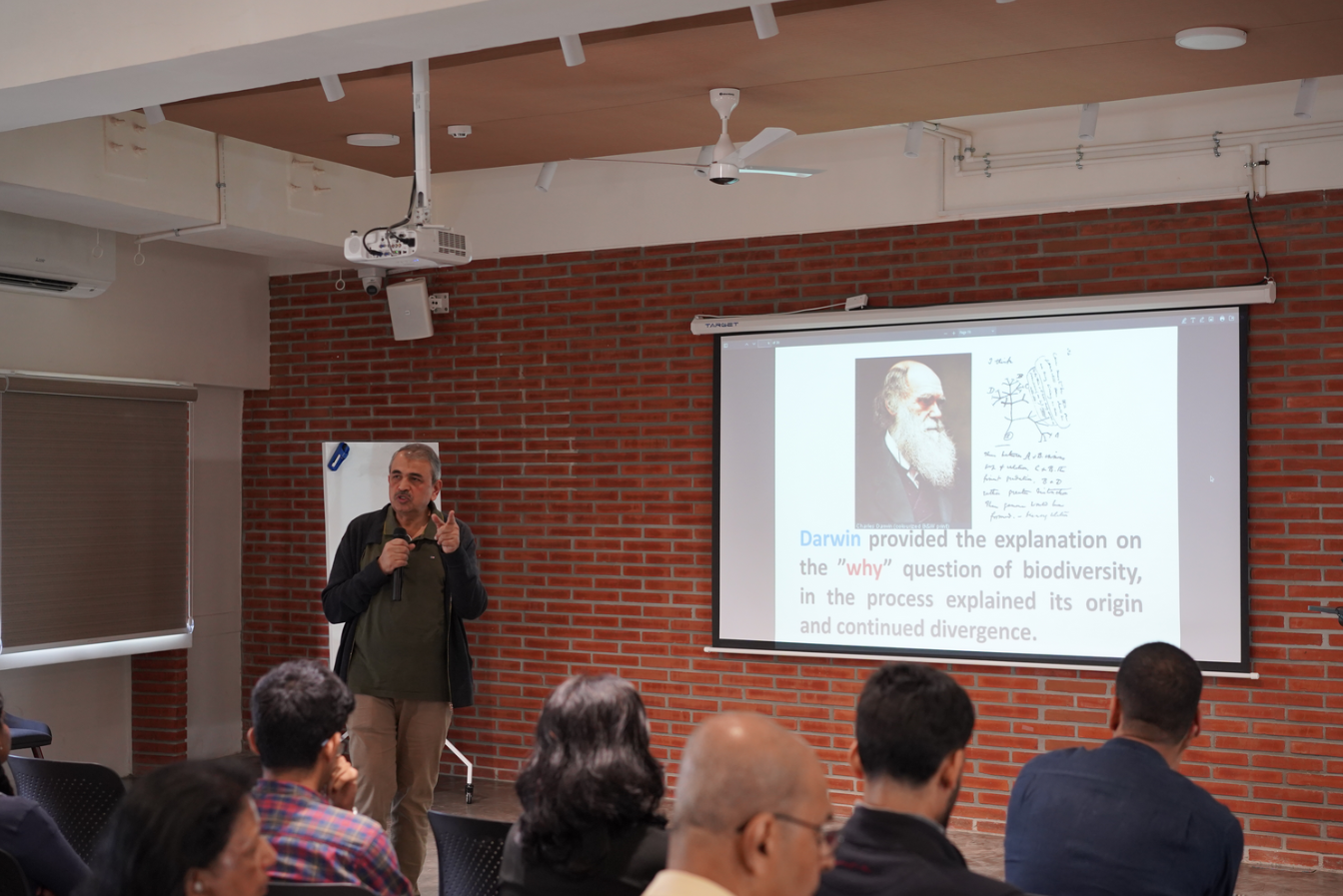
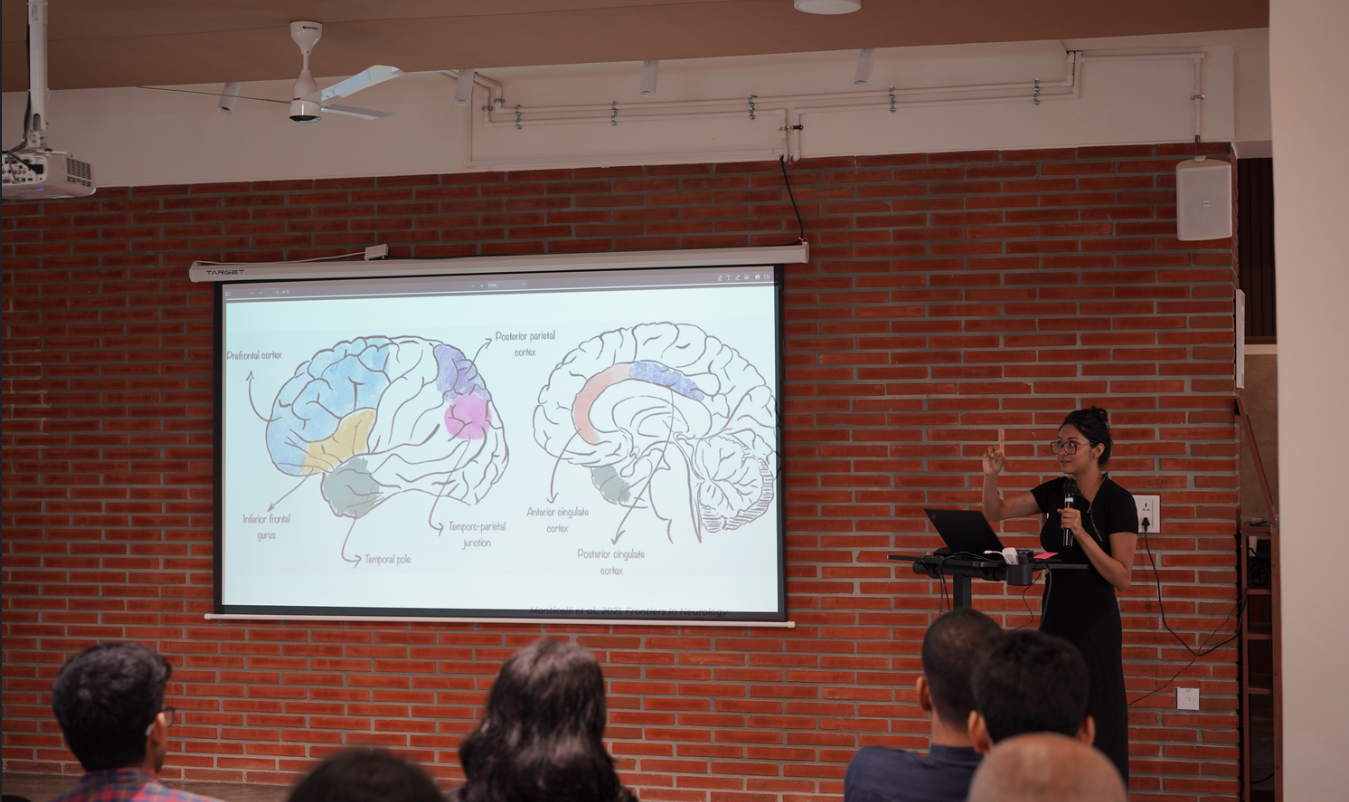
After short introductions by Kailash on why we are starting the new MOSAIC initiative, Mathura on what our first event - Science Sante - is all about, and Rahul on how an unconference works, we jumped into two lightning talks. Prof. LS Shashidhara, Director, National Center for Biological Sciences, talked about how climate change shapes biodiversity, and Dr. Sanjna Banerjee talked about using neuroscience to study theater artists.
The unconfererence
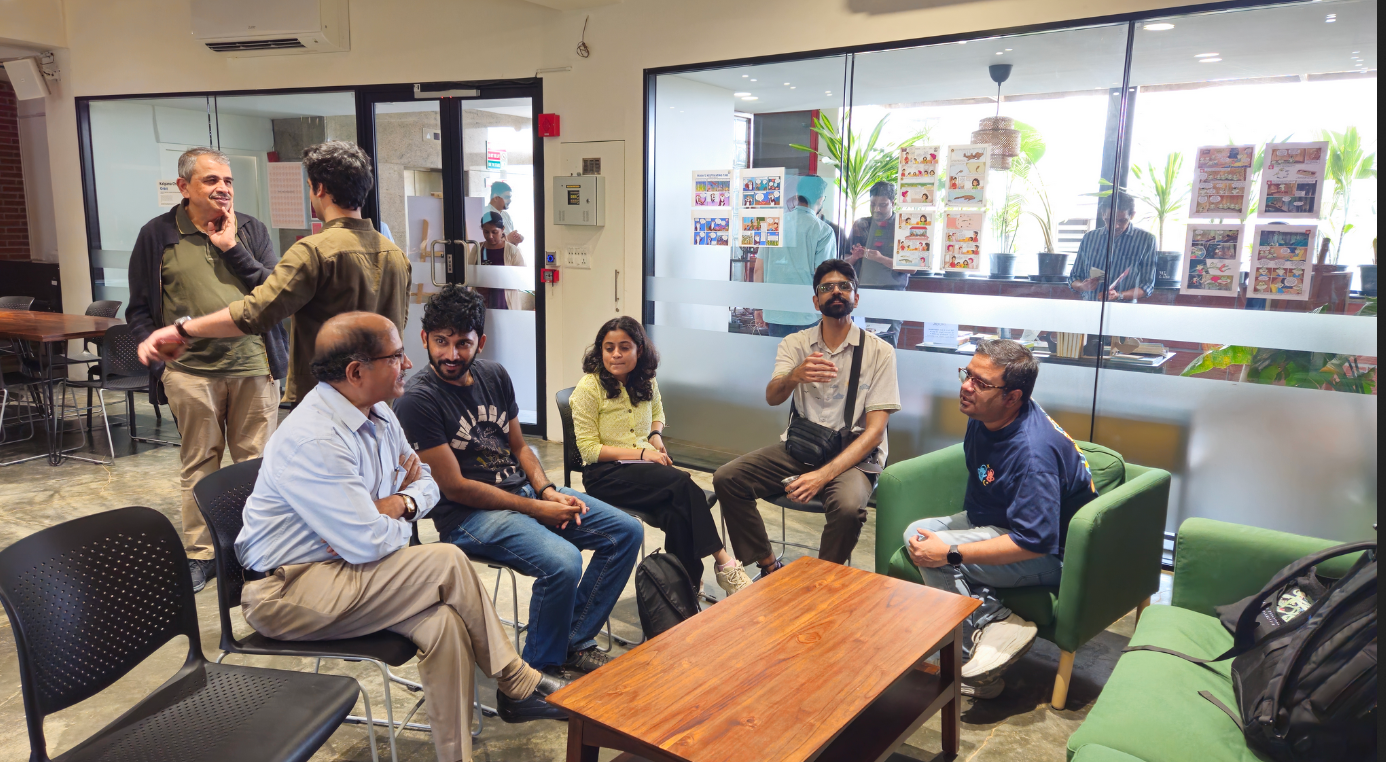
After a short coffee break, we jumped into the unconference sessions. The unconference format was unfamiliar to most of the participants, but that didn’t hold them back from participating in the sessions with enthusiasm. If you don’t know what an unconference is, the participants decide what topics are discussed in an unconference session, instead of a pre-defined list of topics being designated by the event organizers. A few of the participants had shared topics that they would like to discuss ahead of time, which helped the participants get a sense of what kind of topics could potentially be discussed. Thanks to the varied backgrounds of the participants, participants ended up discussing storytelling, games, data sharing, AI, and more in the Science Communication and Storytelling unconference session, and experiential learning, computing/AI and science education, pseudoscientific language in STEM education, and more in the Science Education unconference session. For a full list of topics discussed in the unconference sessions, please see below.
The parallel sessions
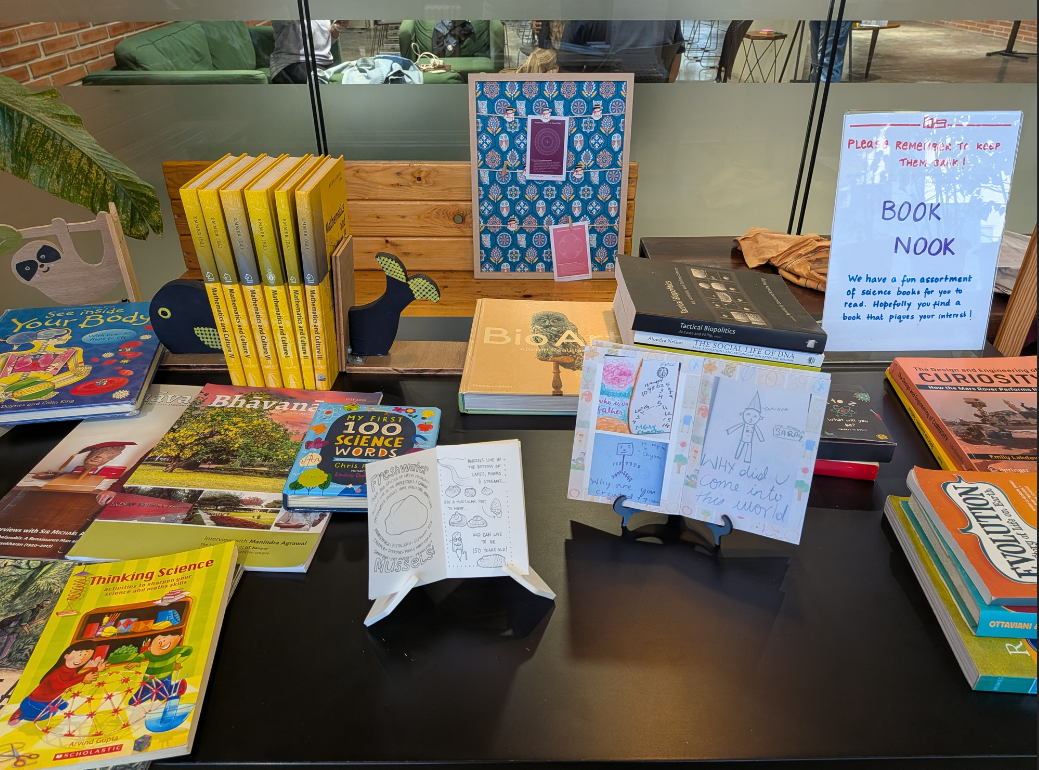
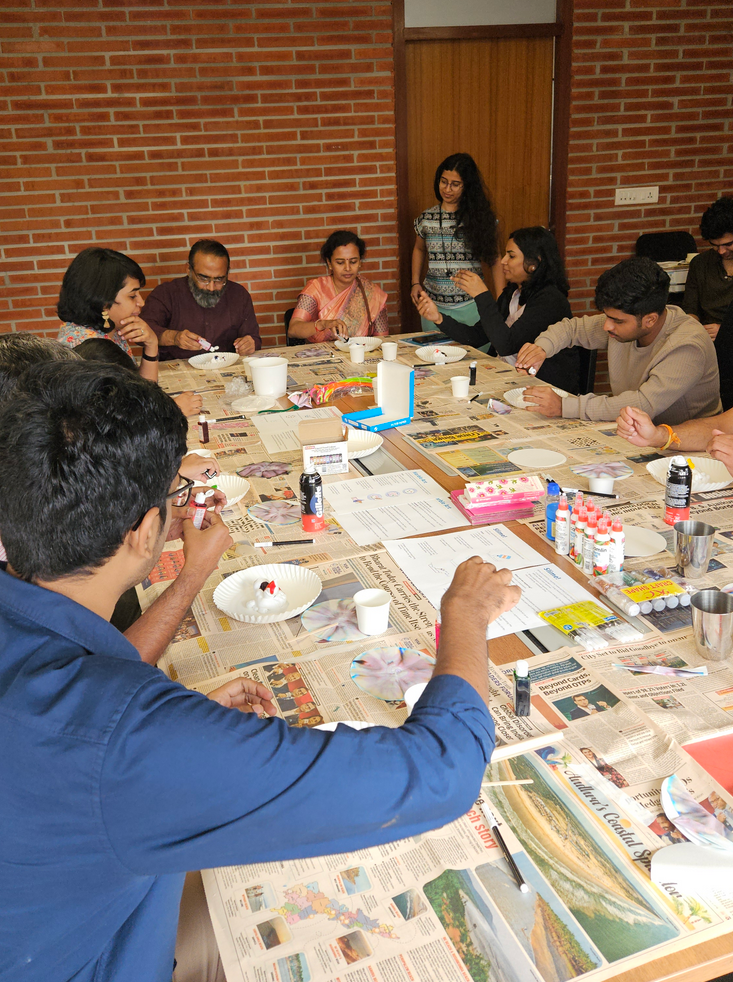
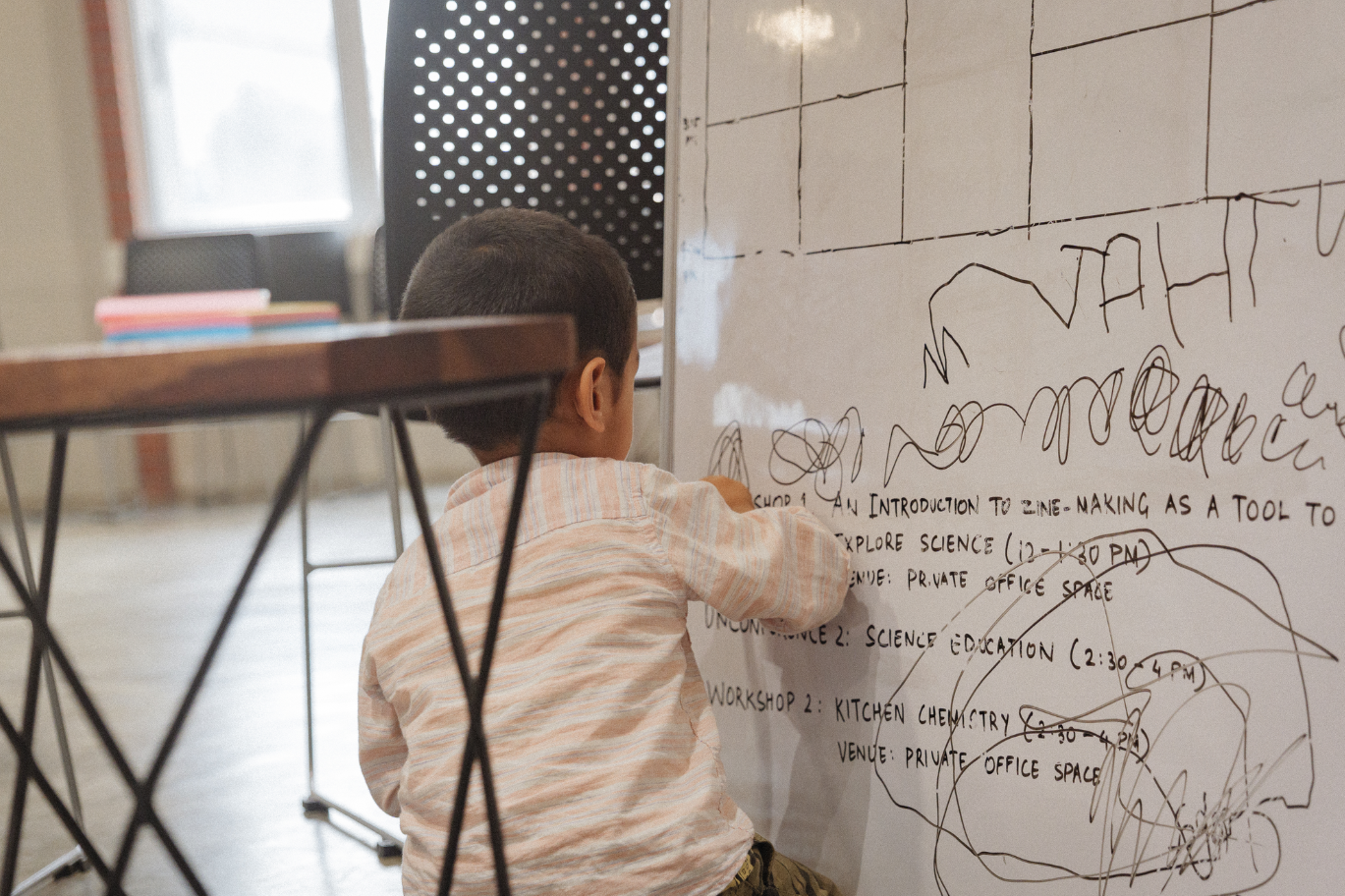
In parallel to the unconference sessions, there was no space to sit during the workshops on Zine making by Kadambari Patil and Kitchen Chemistry by Dipti Dayal. The 3D printer hummed along practically throughout the day. People spent a significant amount of time perusing the books on the science bookshelf, which included books for toddlers, kids, adults, and professionals. ATREE x Tinkle Comics on ecology and conservation pulled people in, and based on the responses from the participants in the feedback session, most of them seemed to have learnt a thing or two about frogs. And because we named the discussion spaces after underappreciated Indian women scientists, everyone looked up at least one, if not more, of them to understand their contributions to Science - Kamala Sohonie, Anna Mani, Janaki Ammal, Asima Chatterjee, and Kalpana Chawla.
Who turned up
We are incredibly happy about the turnout at our first event - including the organizers, almost 70 people participated in the event, more than 30 of whom were women. We had everyone from college students to people pursuing their PhDs, scientists and researchers to science communicators and educators, teachers with more than a decade of experience teaching science to amateurs who like science storytelling. Thank you all for showing up on a Saturday and participating in our event. If you didn’t know, the 3rd of January is celebrated as Women’s Education Day in India, in celebration of the birth anniversary of Savitribai Phule. We have a lot of exciting ideas and new volunteers for future sessions, so we hope to see you at the next one.
Unconference topics
Topics discussed during the Science Communication & Storytelling unconference session
- Communicating the process of science - how is knowledge produced?
- Why do different mediums of sci/math communication fail, and what might we do
- Communicating research - the art of finding a story and setting a narrative to communicate complex research topics
- Games for conservation
- Community ties everything together
- Science journalism and science fiction
- Storytelling and science - why is it important to be a good storyteller (and what does “good” mean)
- Is there “real“ “intelligence” in ChatGPT? What is the science behind today's AI?
- Is there discrimination in science?
- What makes you better at joining the dots
- Game theory
- Don’t worship science
- Sharing data is caring
- How do we collaborate with AI to accelerate learning
- Contemplative science/neuroscience for the common man
- Normalization of pseudoscience - how unscientific thinking becomes the “usual” or the “default.”
Topics discussed during the Science Education unconference session
- Experiential science learning in schools, science education for differently-abled kids, how is science education translated into the classroom, and off-school science education for kids
- Astronomy for the underprivileged
- Evolution - the science of life
- Computing/AI <> Science Education
- Science education related to neighborhoods with a civic focus
- Pseudoscientific language in STEM education
- Ethics and power in science visuals without stereotyping
- Movement and play-based STEM education
- Formal theorem proving
Volunteers
Volunteers who helped with the organisation and running of the event: Aditi Bhat, Dipti, Himadri, Kaustubh, Sneha, Vishnu, Roshni
Additional read: Reflections about the Data Selfie board and the data visualization process by Aditi Bhat.