Mosaic's Science Sante #2 brought alive the etymology of the word ‘mosaic’ for me!
The word mosaic comes from musaicum: Medieval Latin for "work of the Muses." The nine Muses of Greek mythology presided over the arts, science, music, poetry, history, dance. Muse also means to think, ponder, reflect. The Greek root mouseion of the word also leads to ‘museum’! So Vishweshwara Industrial and Technological Museum (VITM) was the perfect venue! For anyone like me who grew up in Bangalore in the 2000s, VITM was a prime field trip spot :D
The themes this time were "Bridging Art & Science" (the nine muses would’ve enjoyed this) and "Scientific Rigor and Temper in Society."
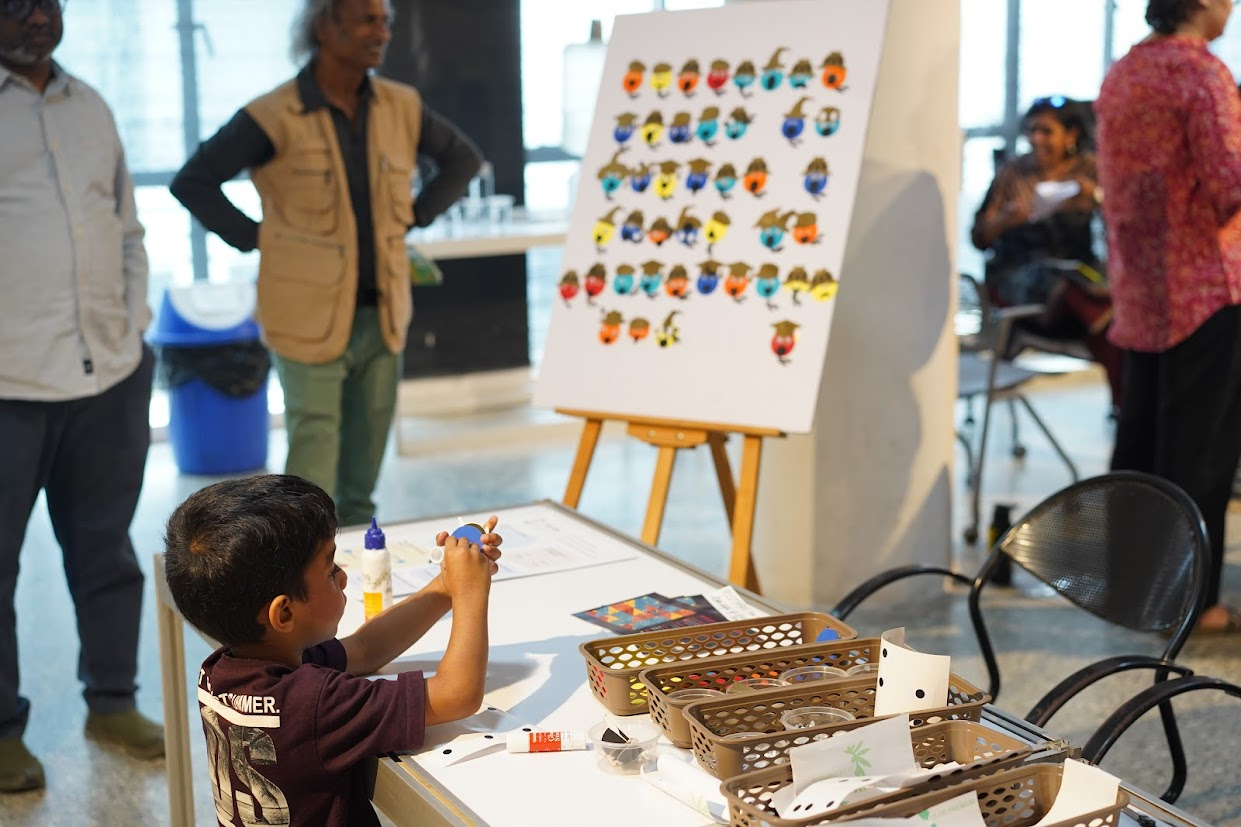
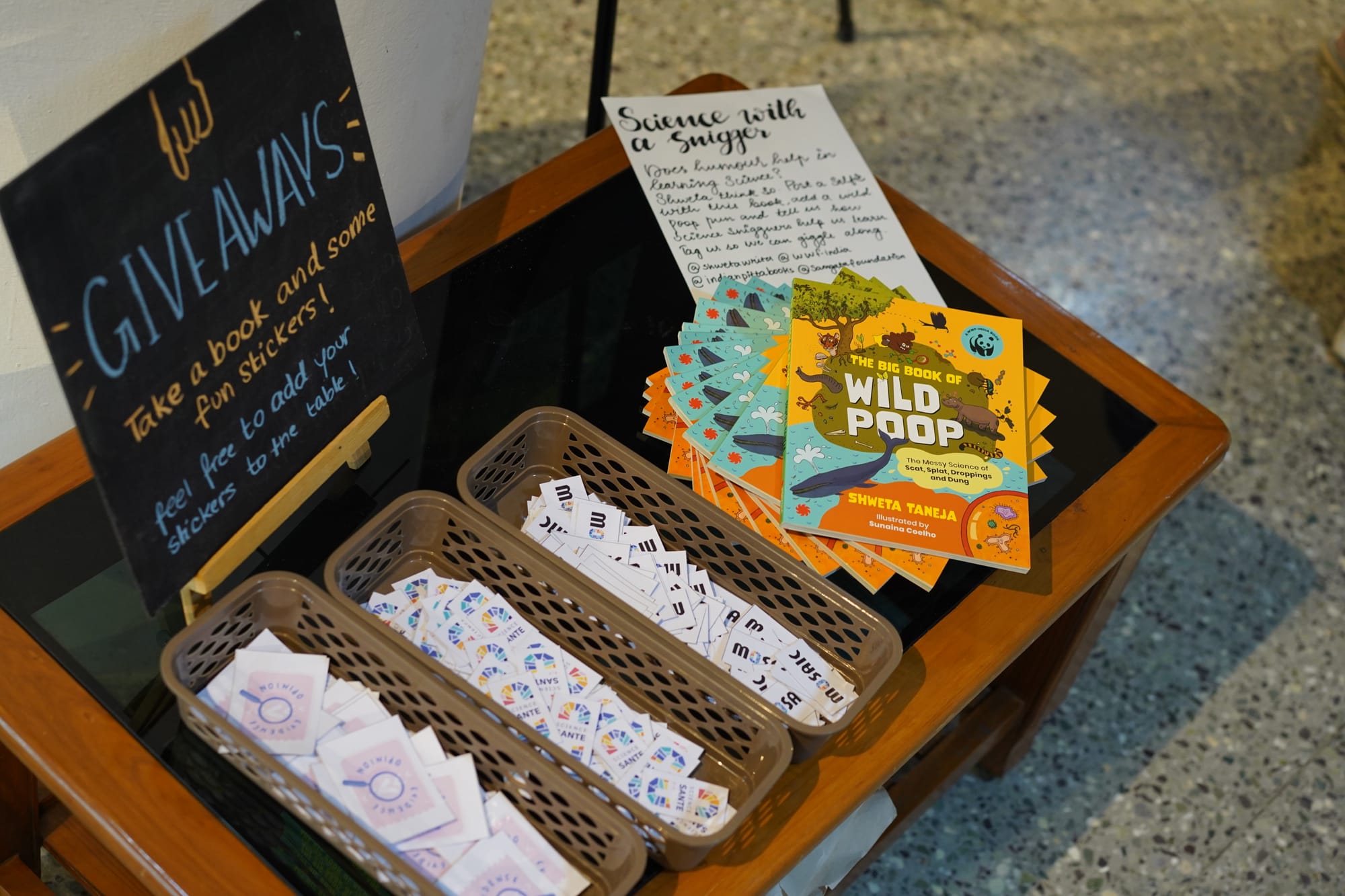
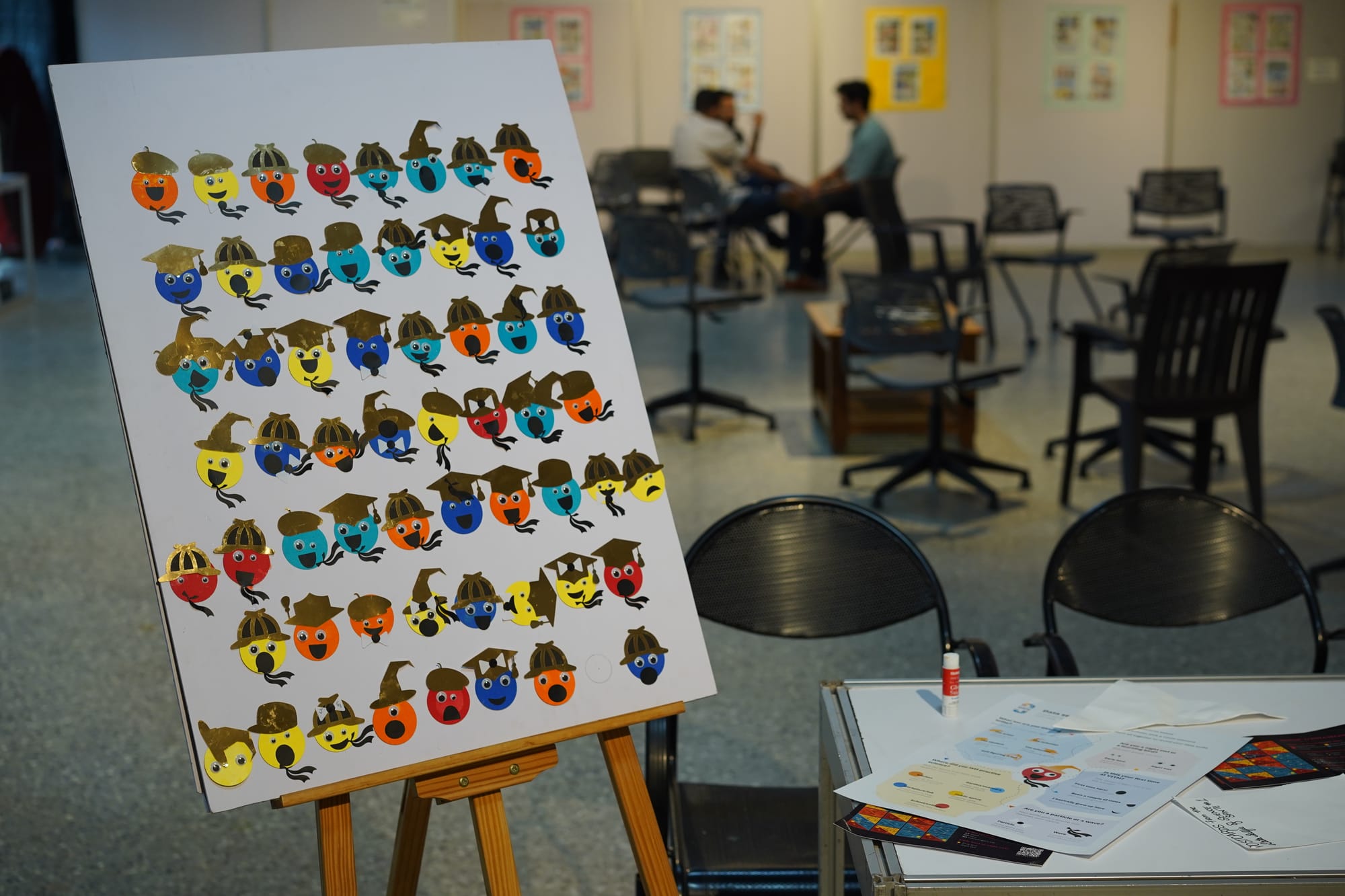
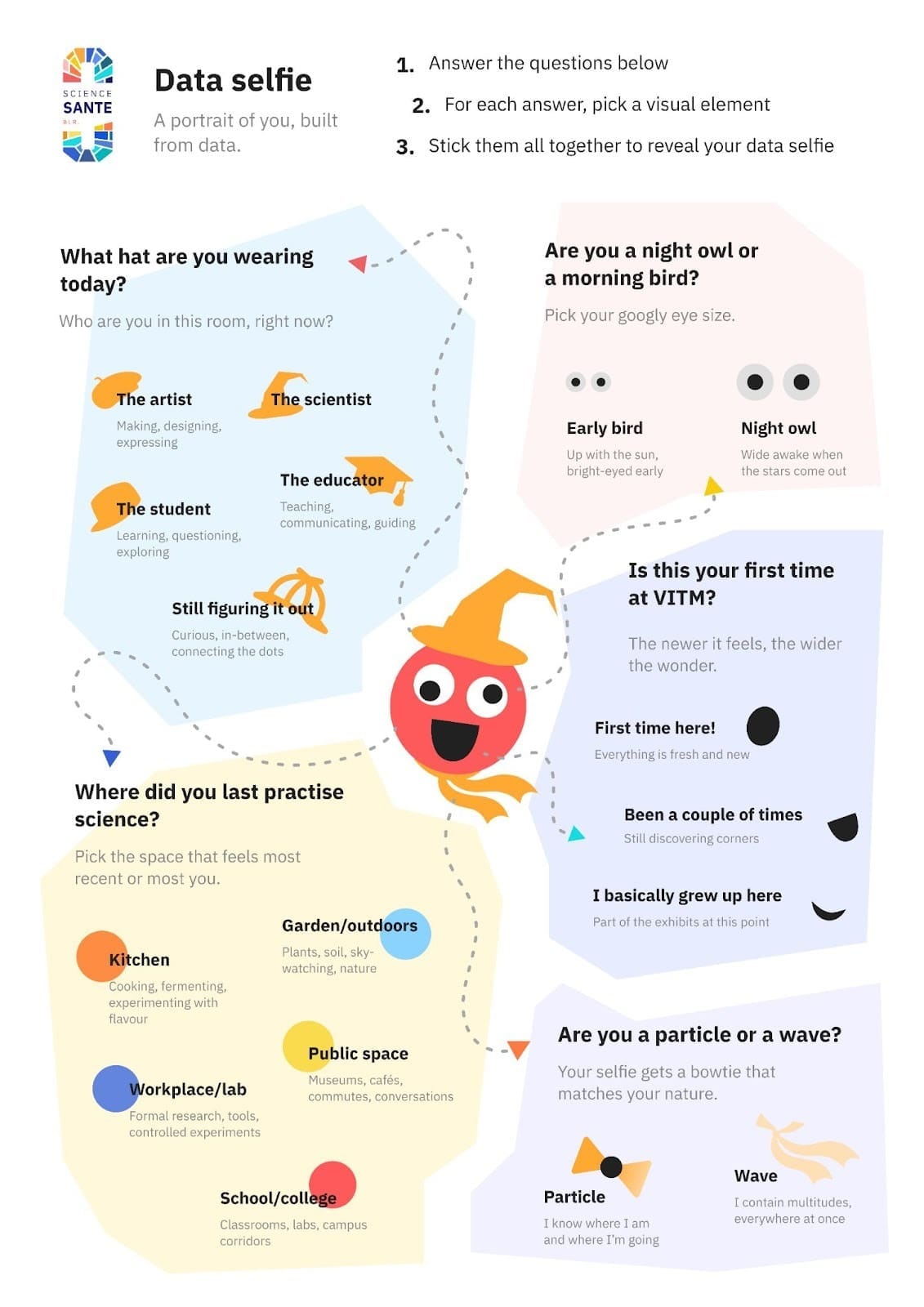
As soon as you entered the space in VITM , there was the data selfie set up, and giveaways on the side. The giveaway book this time was Dr. Shweta Taneja’s “Wild poop”! A data selfie is a fun way to tell people about yourself, this time’s questions and results are below. Mathura, Kritika, Sakshi and I had a great time creating this one. If you want to know more about Data Selfies and how it went down at Science Sante #1, read here!
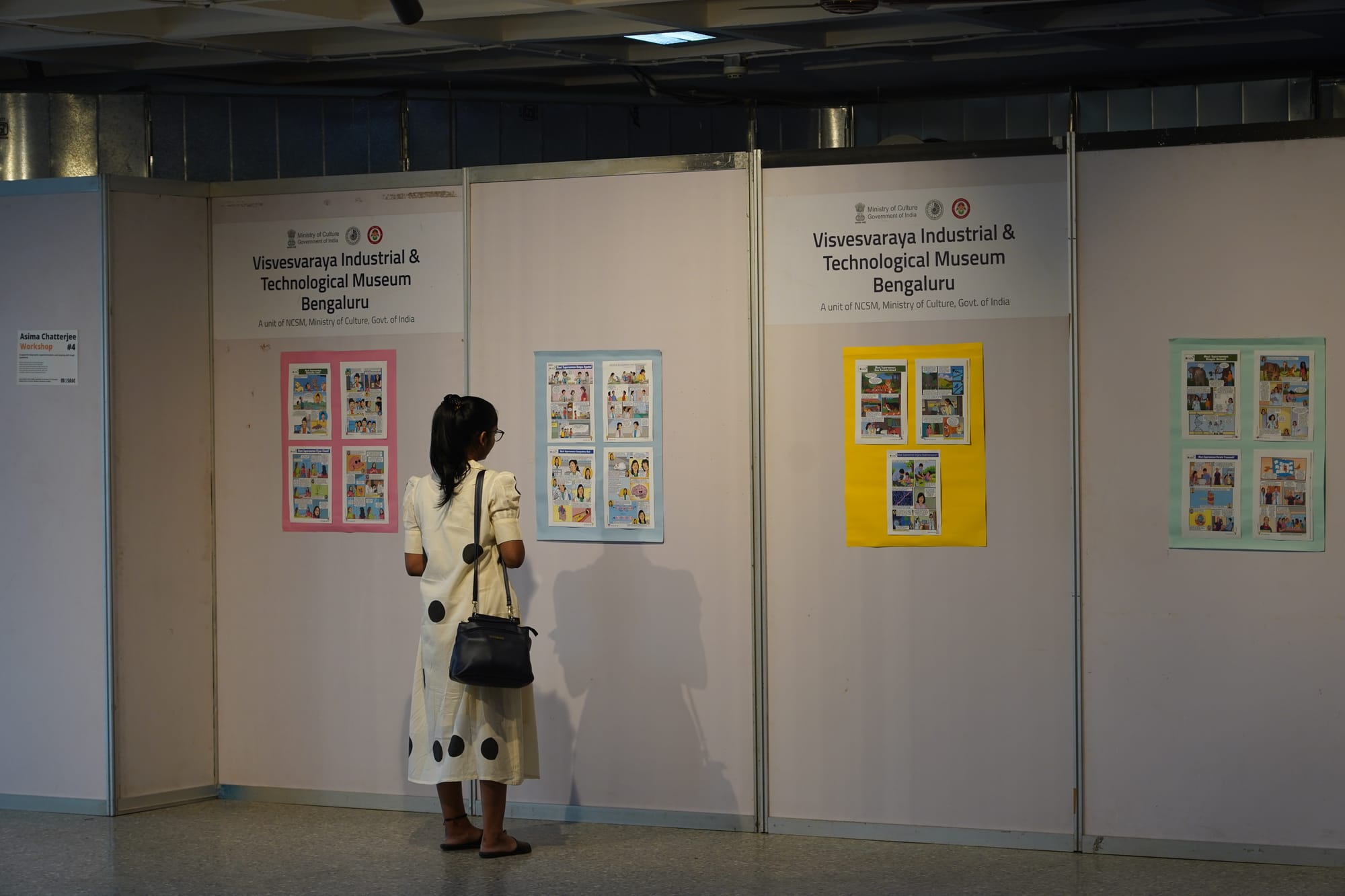
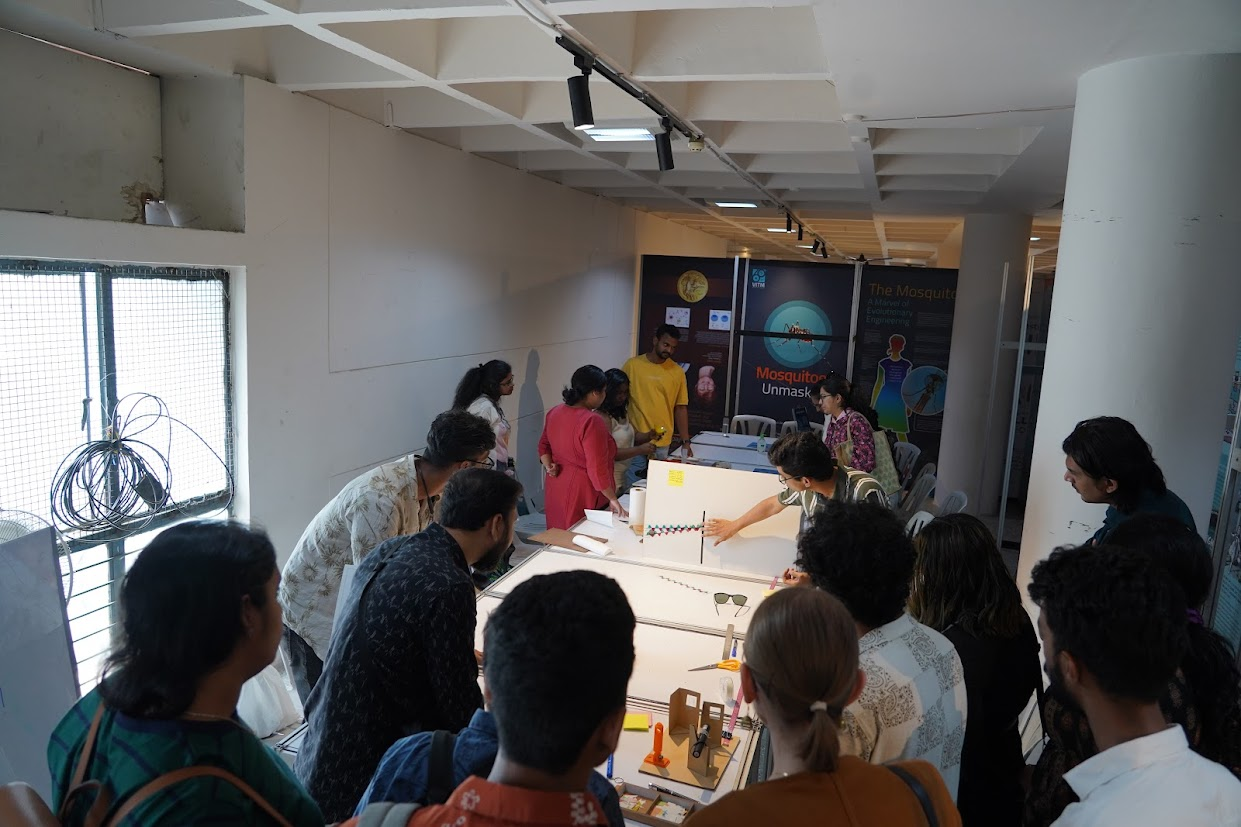
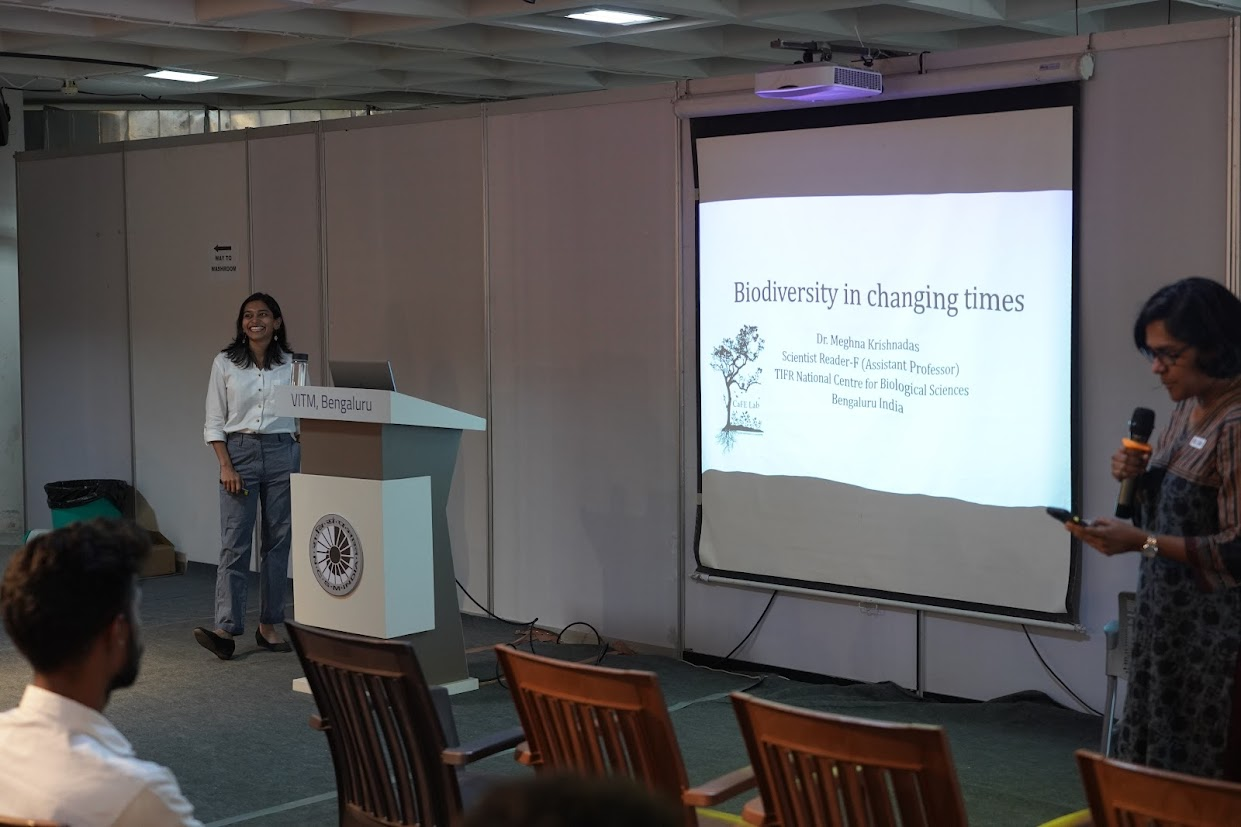
From here, you could make your way to seven science stations set up by VITM with tangrams to solve, velvet hand illusion, double pendulums, crystal defects and more! I personally thought this would be a fun escape for when social battery gets low from all the networking. There were Tinkle Comics by NCBS featuring women scientists and their stories. One of them, Dr. Meghana also delivered a talk at 2:30pm for us!
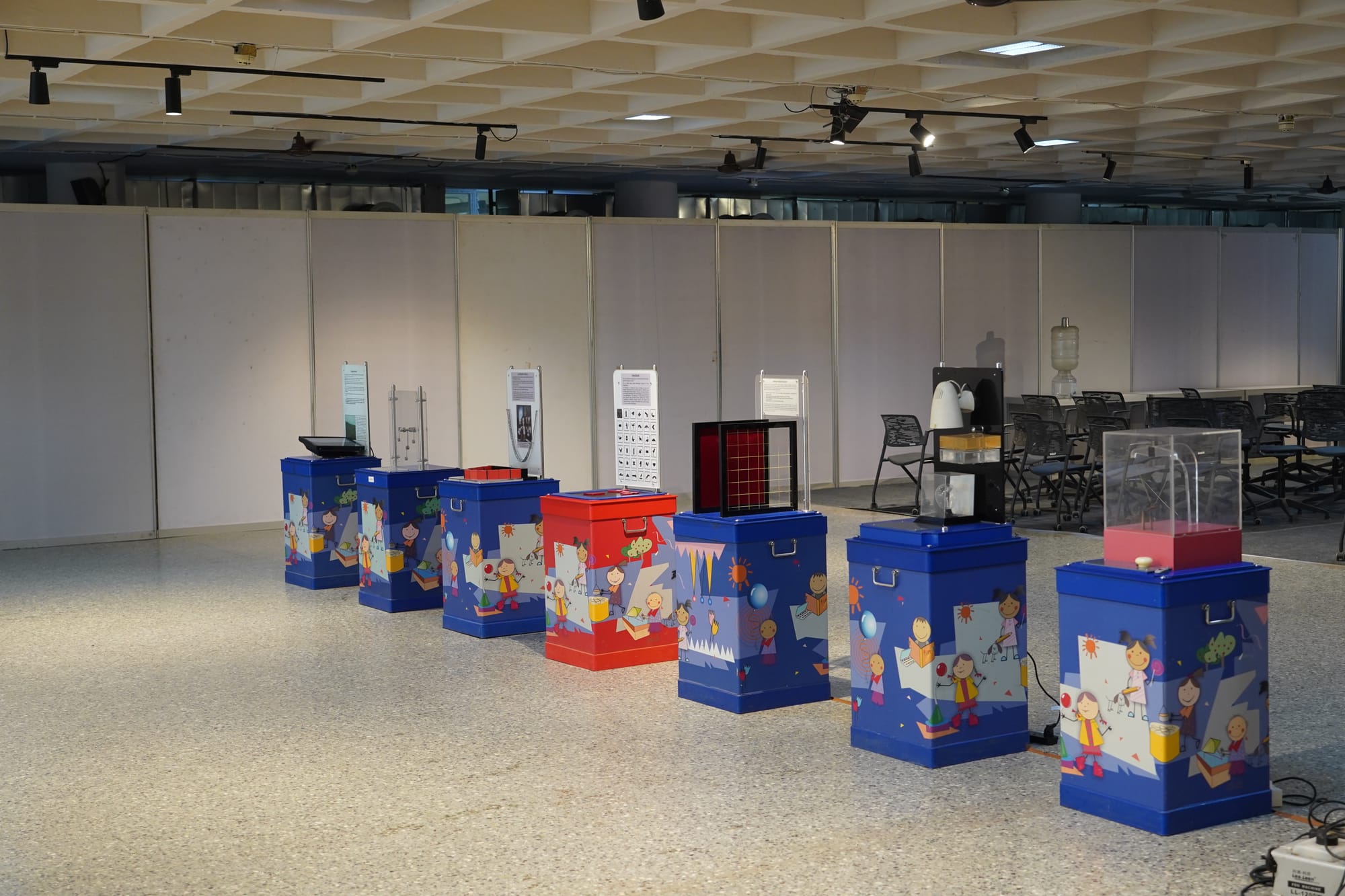
Past the science play stations, there was a book nook and 3D printing station set up by Paper Crane Lab (PCL) and manned by our intern Sakshi where you could get a mosaic gyroscope printed! Next to that, chairs were lined up facing a screen, making the space where the talks were delivered.
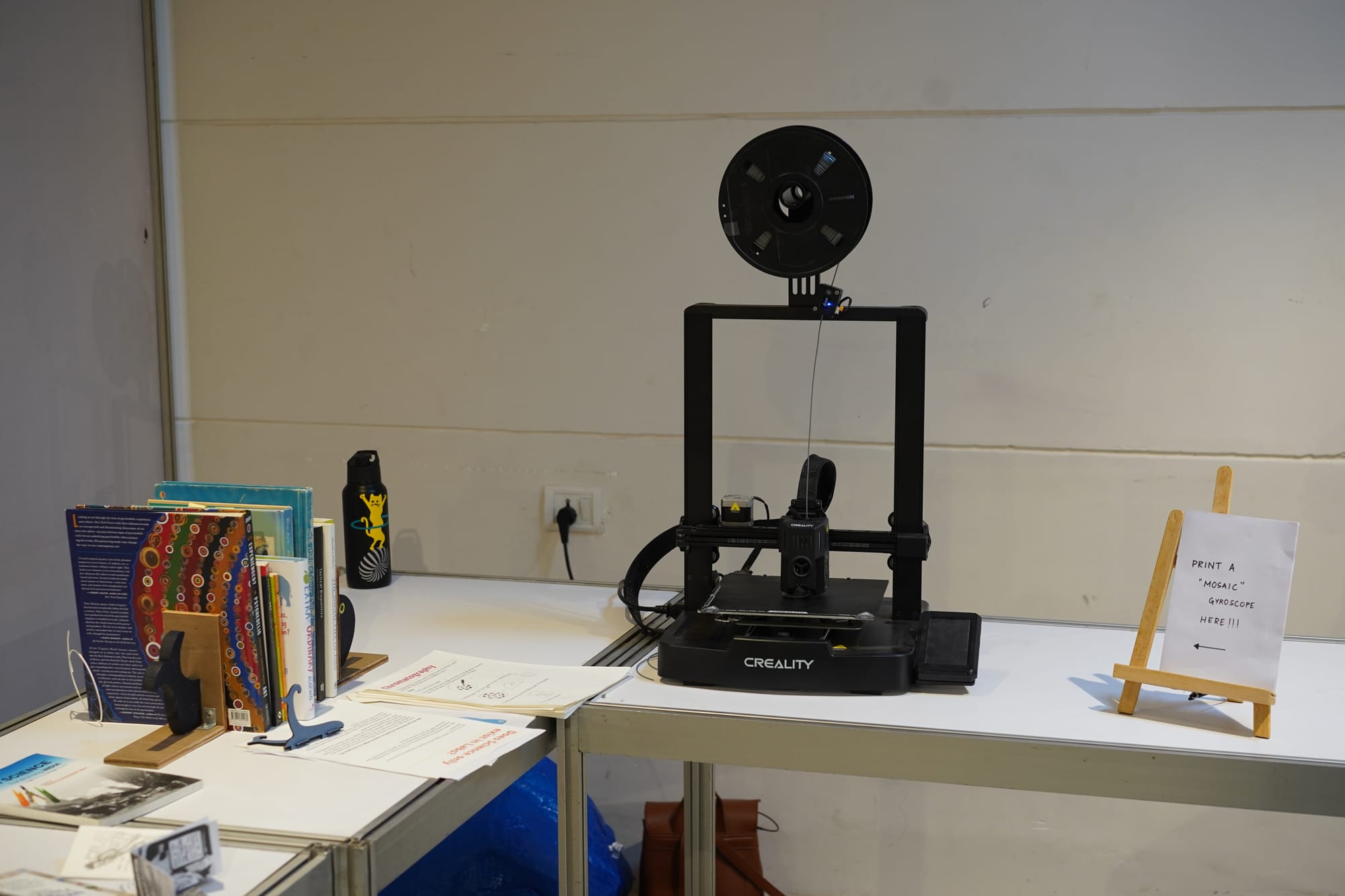
This setup, I felt, made it easier to strike conversations with people! If you didn’t know anyone at the event, you could go and experience these, and someone else could join you, or you could use these as conversation pieces later.
Just before the first talks started, the tiredness of last evening’s prep hit me. I went to grab a cup of coffee and check on the data selfie station to see if it was going smoothly (thanks to Kritika’s great poster, it was!). There I met Anaha and Gokul, who I'd heard so much about through PCL. They run a homeschooling community called Aarohan. We fully nerded out on math/education/origami and I would kill to visit their library.
I mentioned Eugenia Cheng whose works like How to Bake Pi (which explains category theory through baking), and it turns out, Gokul is doing similar work! He’s connecting Indian philosophy to mathematics and category theory! How amazing it was to find and be able to talk to people who are basically writing books that I could be reading/studying one day :D
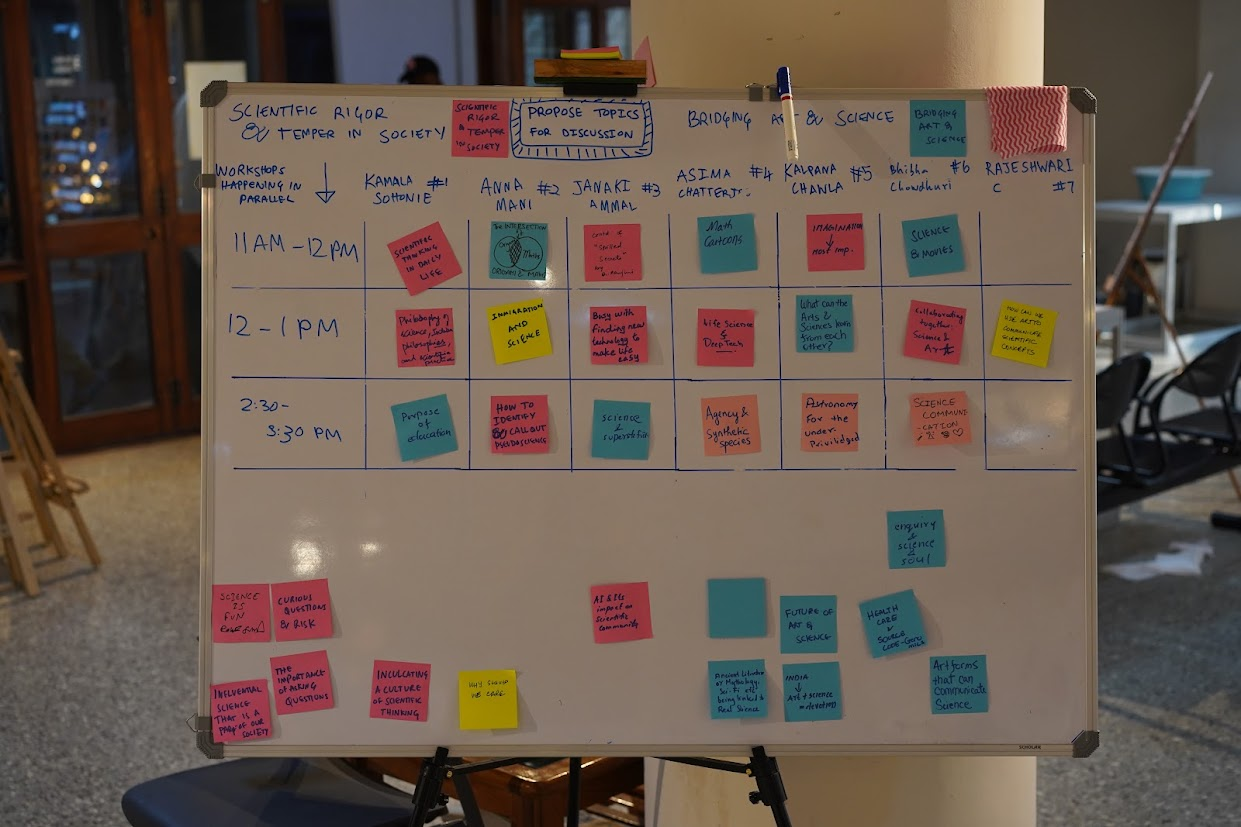
Anaha said she was planning to attend the math and origami unconference, but we ended up having an unconference right there! I had put this topic up on the board in the morning, with a venn diagram of math and origami trying to be art/sciencey.
By the time Anaha, Gokul and I headed to the talk area, Dr. Ranjini’s talk “Spilled Secrets: What drying droplets tell us about the material within” had just ended. Something in the air there had changed since I left, the knowledge shared by Dr. Ranjini was almost palpable! Mathura was sparkly eyed, she said the talk had been set up so wonderfully, connecting something familiar to something surprising, clicking at the end in the best way! “This is the morning coffee we needed”, she said, referring to Dr. Ranjini leading the audience to whether coffee is a suspension or a solution (spoiler alert: it’s both!). I couldn’t believe I missed it.
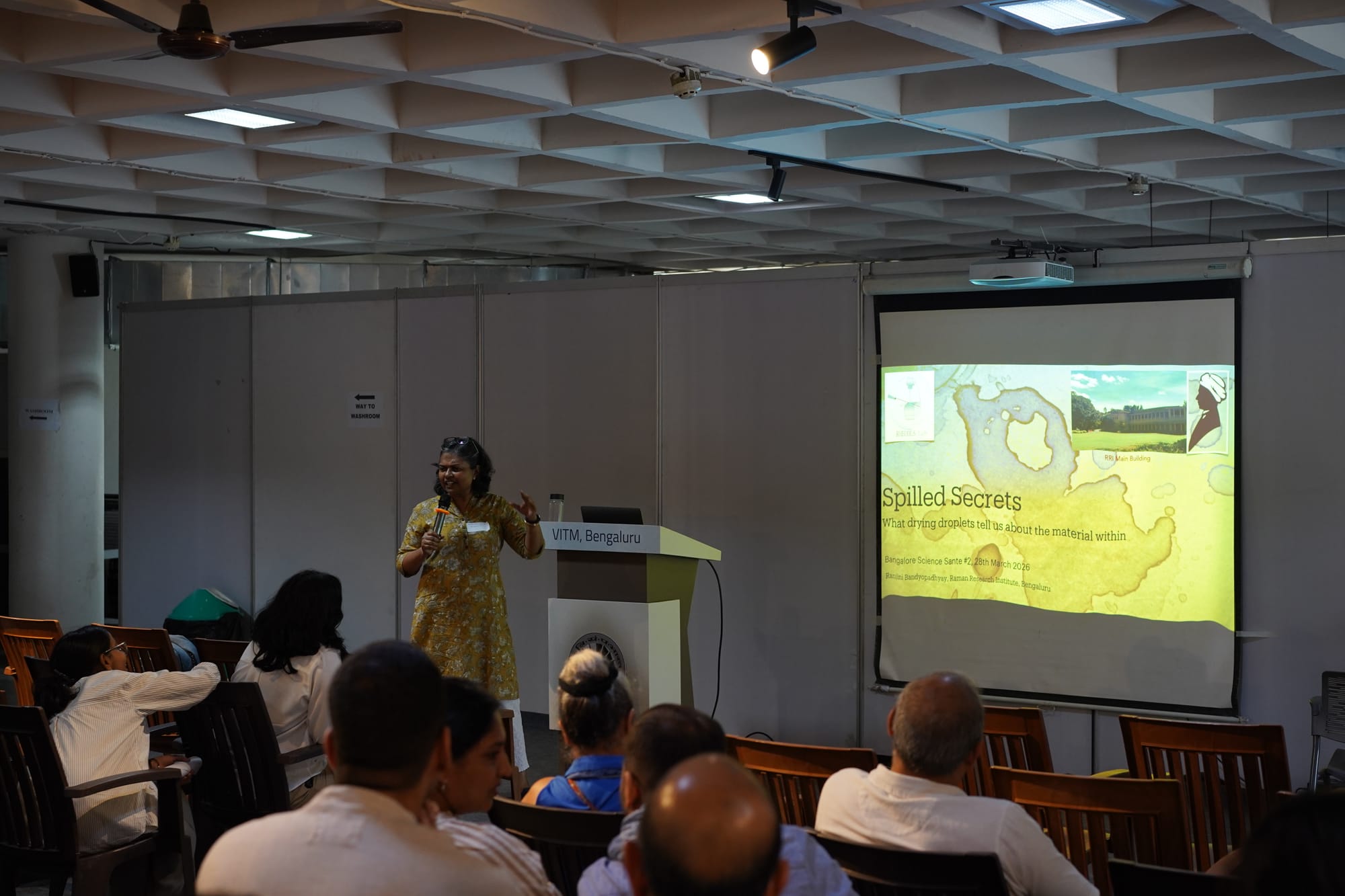
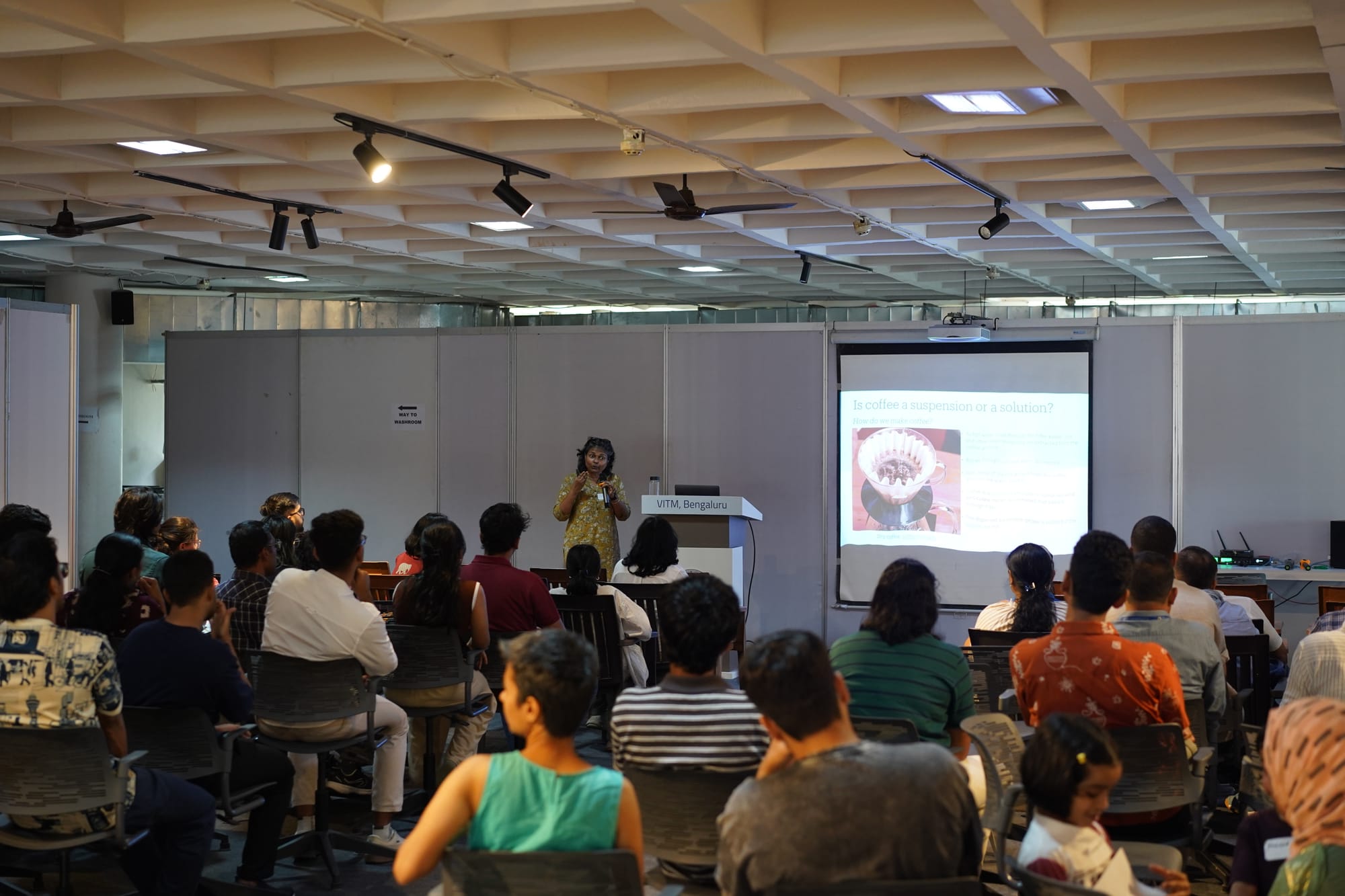
I wouldn’t have turned back time because my interaction with Anaha and Gokul energized me so much that I didn’t need coffee anymore. But that's something every Mosaic attendee experiences — the FOMO of what's happening in the other room, the other conversation, the other session. It’s hard to experience every tile in a mosaic, the tile is shinier on the other side!
Post tea and snacks, it was time for the math and origami unconference session! I had come prepared with origami flashers and tessellations, because of the fascinating math in them. An origami flasher takes a 7x7 square grid and collapses it into a 1x1 cube — NASA has been inspired by this mechanism to send satellites into space! Everyone was having so much fun with the oscillating flashers, so I decided to teach them how to make one! On the way back from getting paper, I realized I do a 2-hour workshop on flashers — I had 20 minutes, so we started with DNA helix spirals instead.
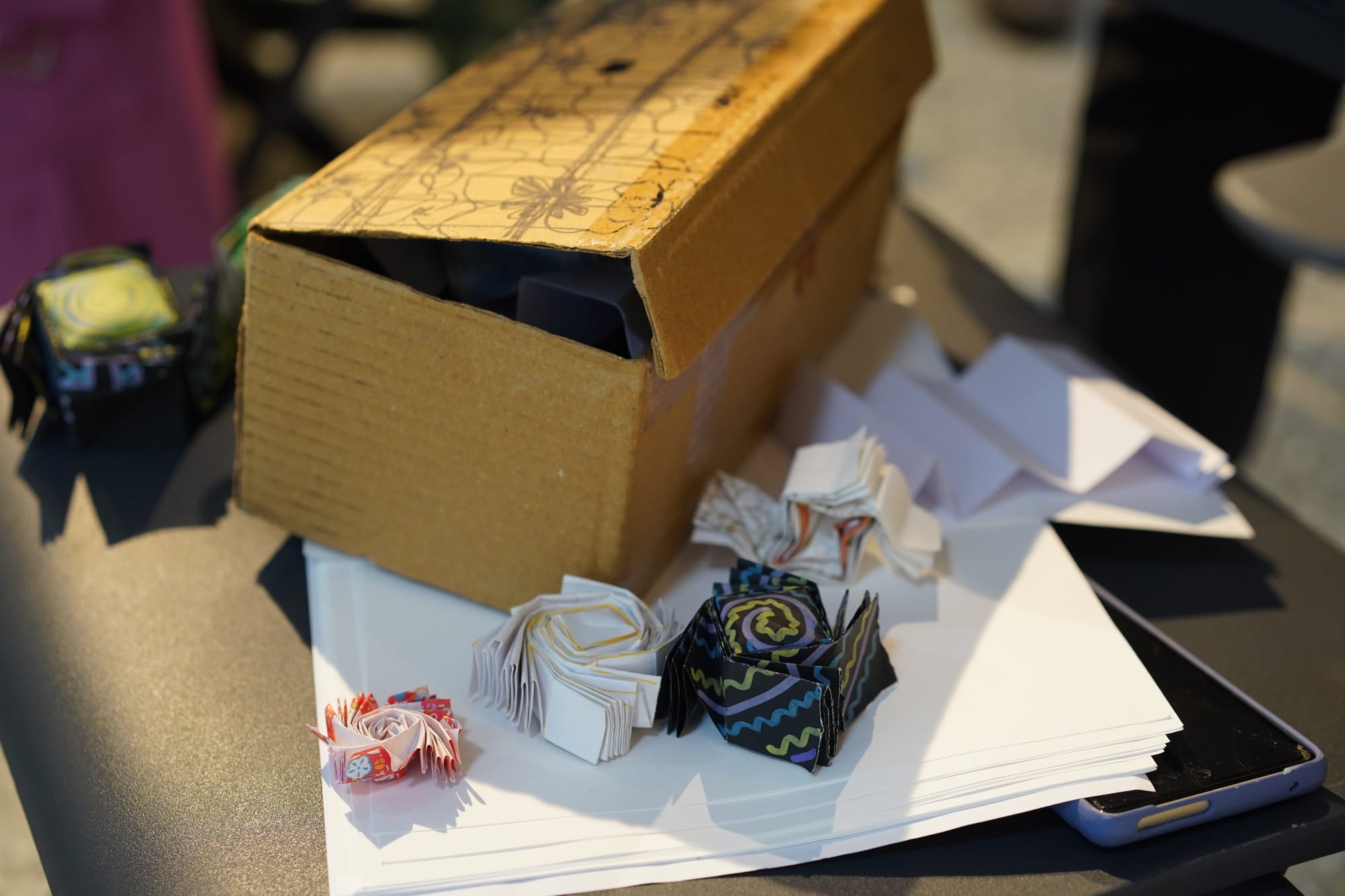
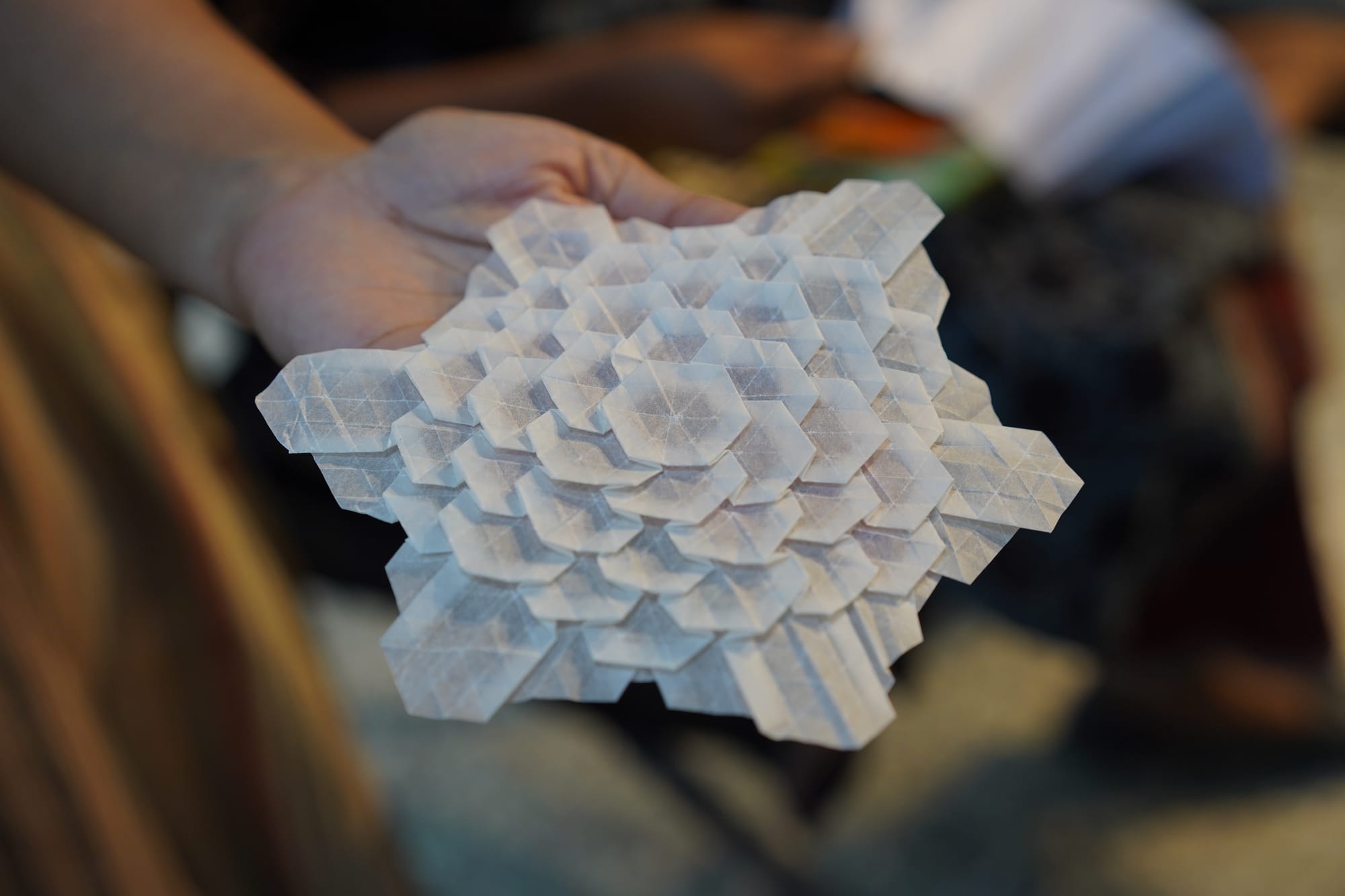
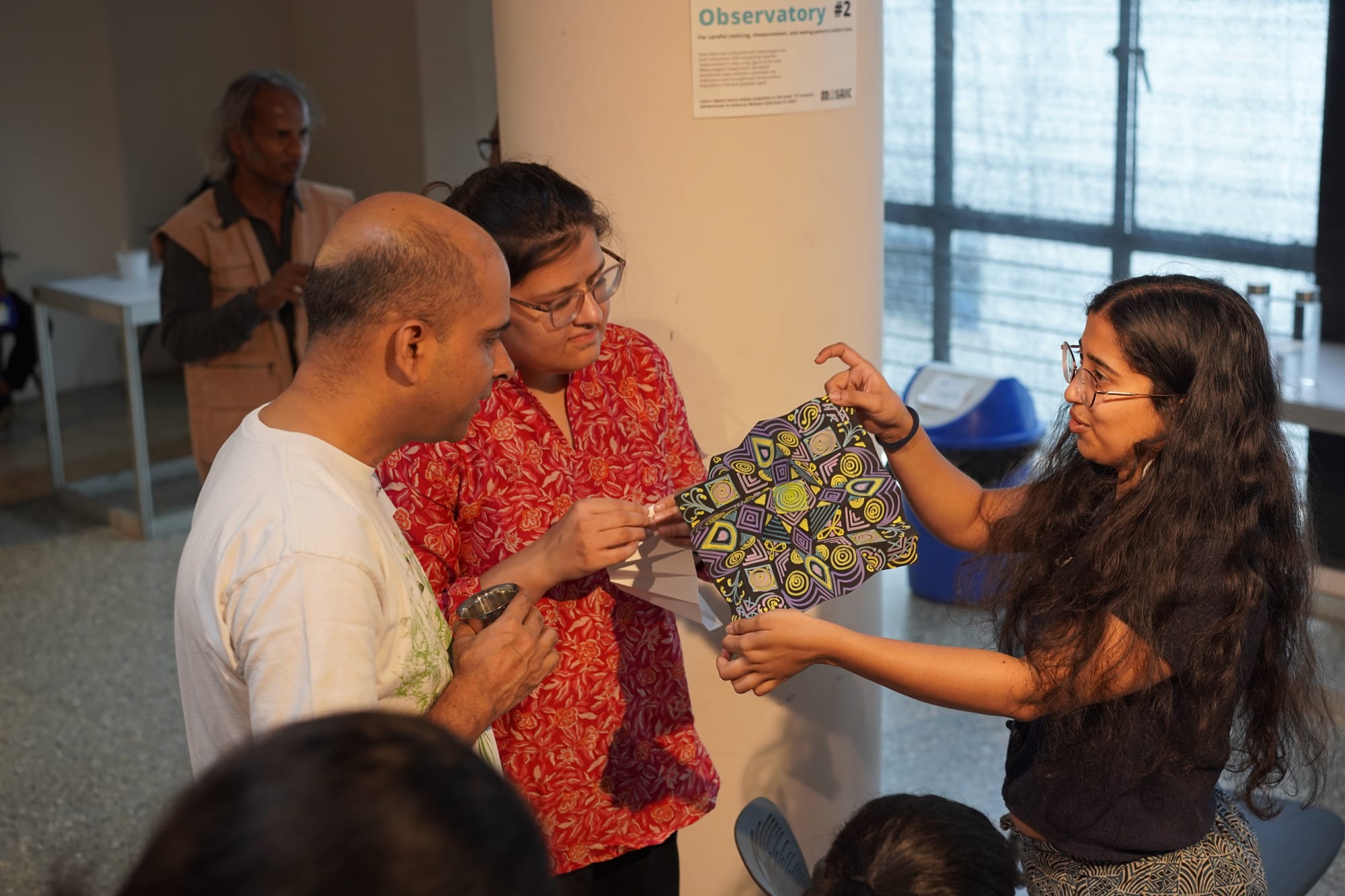
While folks were making spirals, Anaha was deconstructing the flasher and figuring it out herself, like a puzzle. She also found that some of my flashers weren't odd-numbered squares. A mathematician in the group pointed out that the spiral model brings gradients to life — it's a simulation of how folding happens in molecules, the compounding angle change in each line giving it its shape. I loved that everyone added their own layers to these models, and I left with more rabbit holes than I came with!
During the second unconference slot, some PCL and Mosaic volunteers found an empty circle and sat down for a casual catch-up which, naturally, turned into an origami-math session. Dipti showed us how to fold a paper protractor with all the angles you'd need — 15, 30, 45, 60, 90, 120. Interestingly it’s a triangle and not a semicircle!
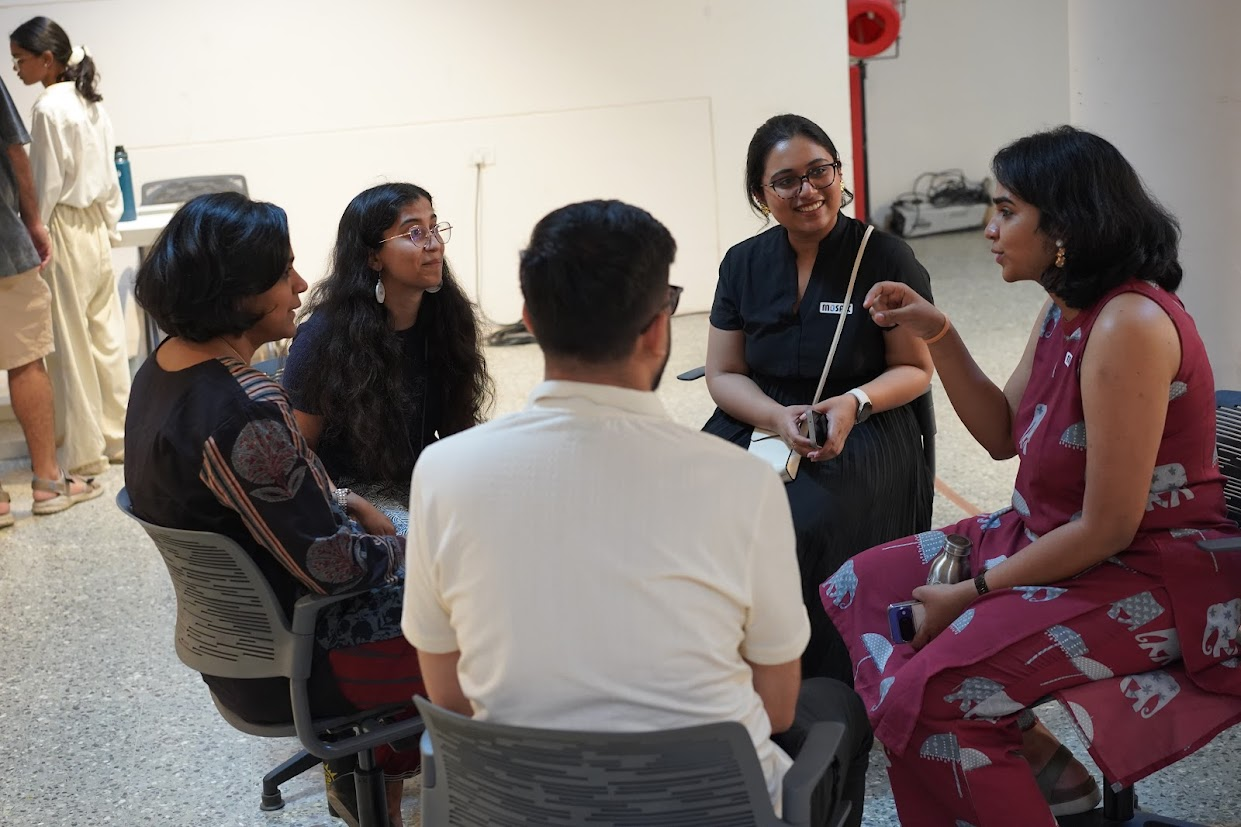
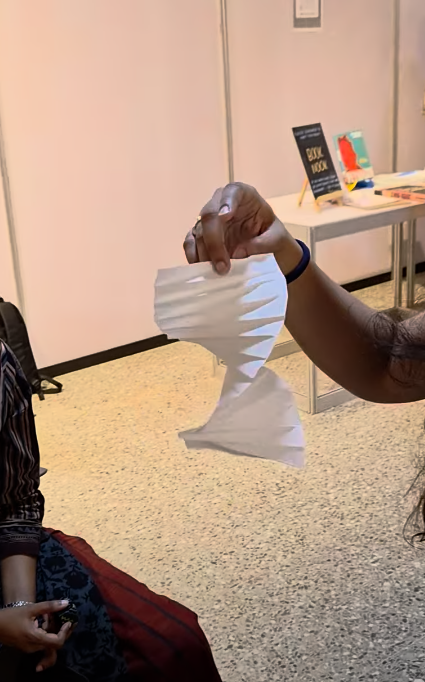
A person walked in saying "I missed this session last time and requested Rahul to bring it back — I'm so glad it's happening again!" That turned the session into the first origami unconference!
I managed to fold a 16-fold spiral this time, having a steeper angle and a tighter twist. The person who walked in was a molecular biologist, working with DNA in an experiment just the night before, and said the model holds up quite well!
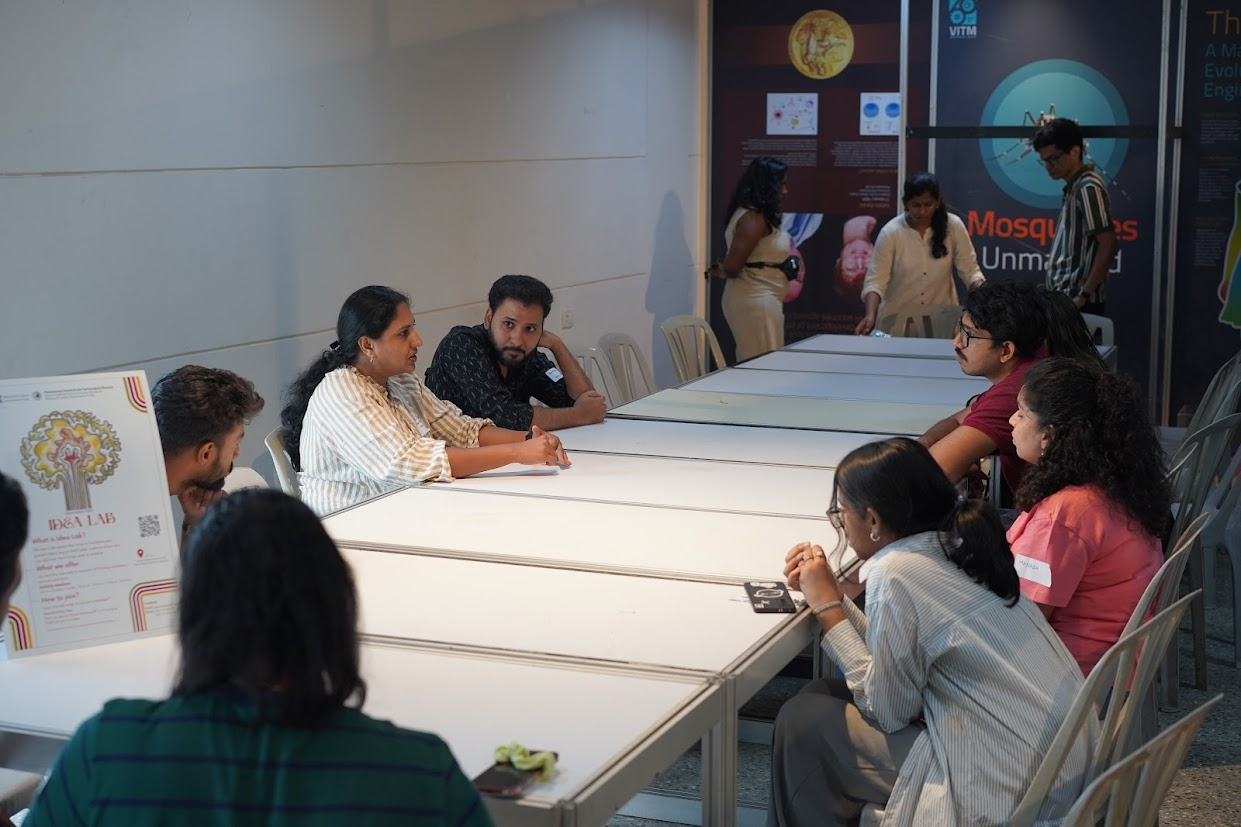
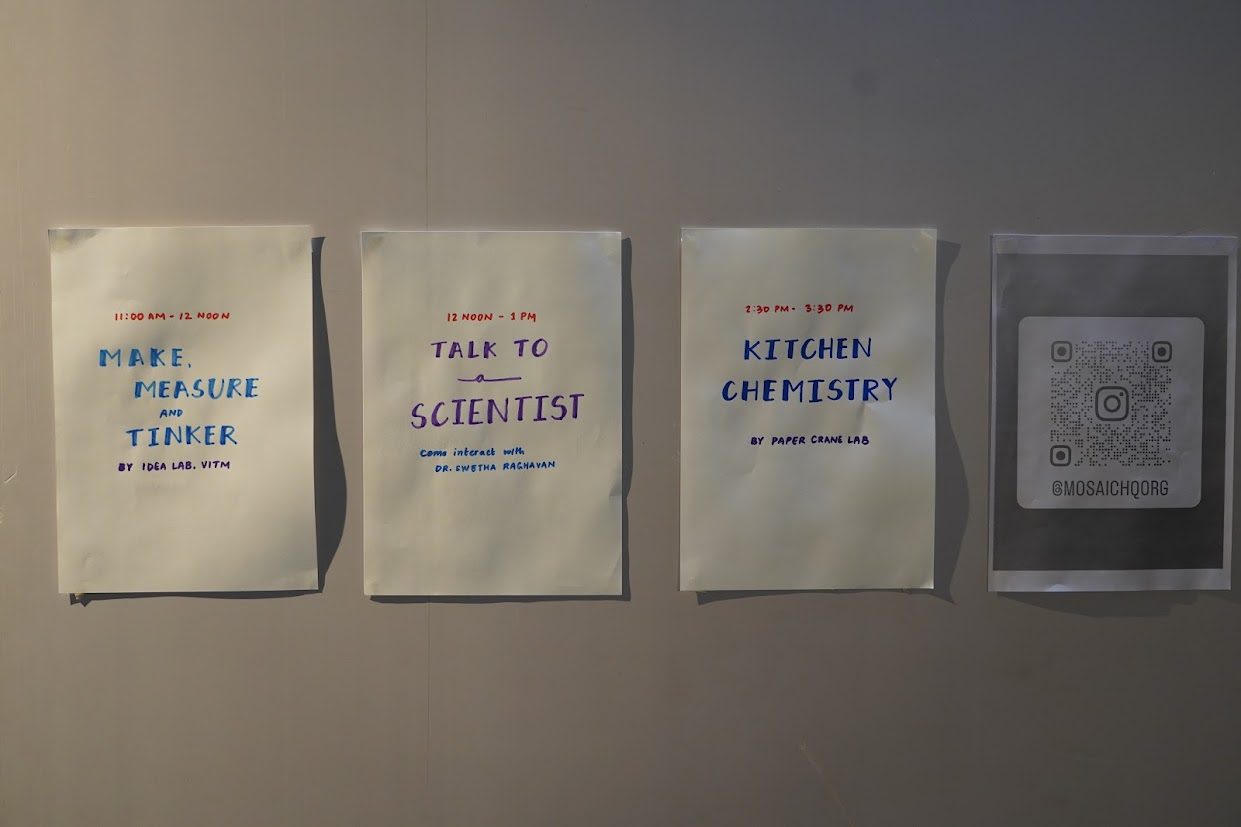
Meanwhile, the VITM team was running Make, Measure and Tinker. I could feel the pull from across the room as folks came out with beautiful yellow anthotype prints. A Talk to a Scientist session with Dr. Shweta Raghavan ran in parallel — another tessera (a single tile in a mosaic) I only glimpsed from a distance.
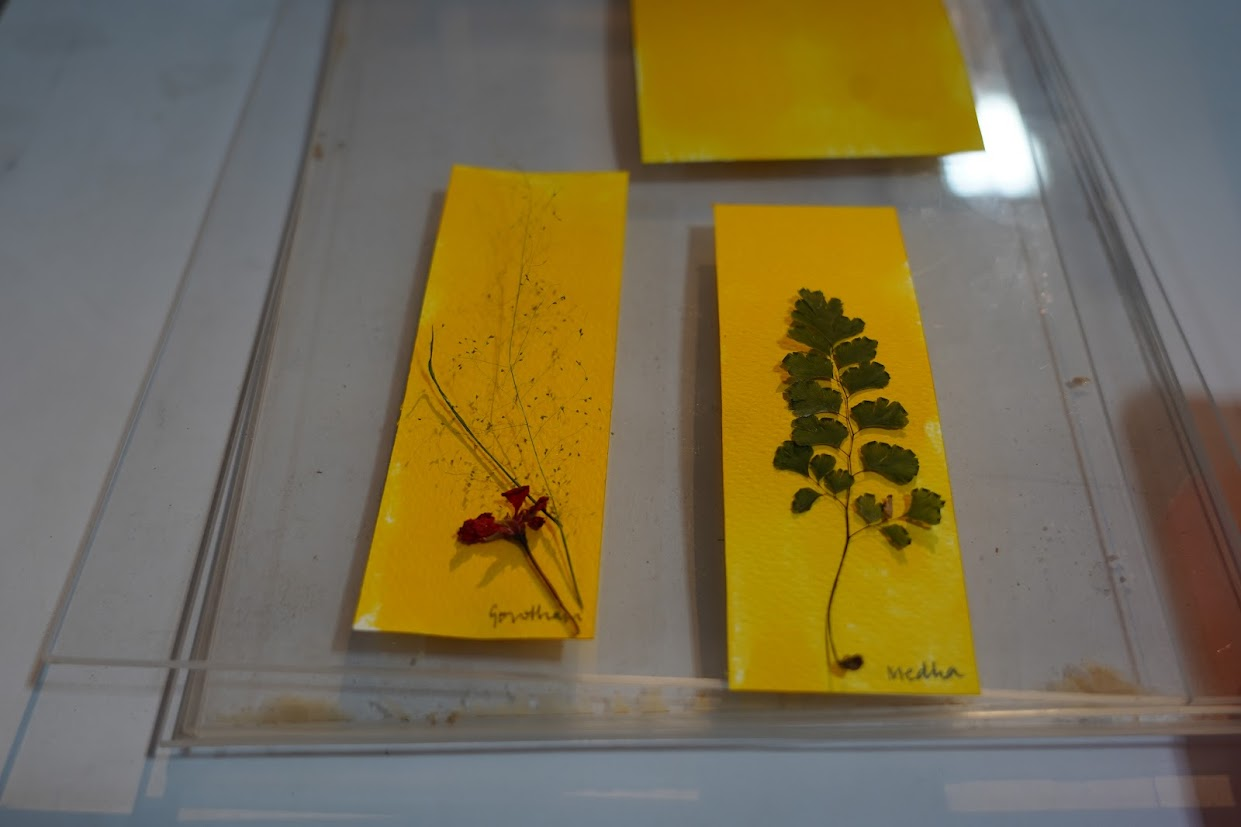
Lunch had a Brownian motion quality to it — people colliding, bringing others in, dispersing to different groups. The food from North Karnataka also sparked a ton of conversation! I met folks I’d seen on LinkedIn for a while, and they were even lovelier in person.
Himadri from PCL ran a science quiz packed with memes and puns. Never have I chuckled at chirality, Pythagoras and Buckminster Fuller like that!
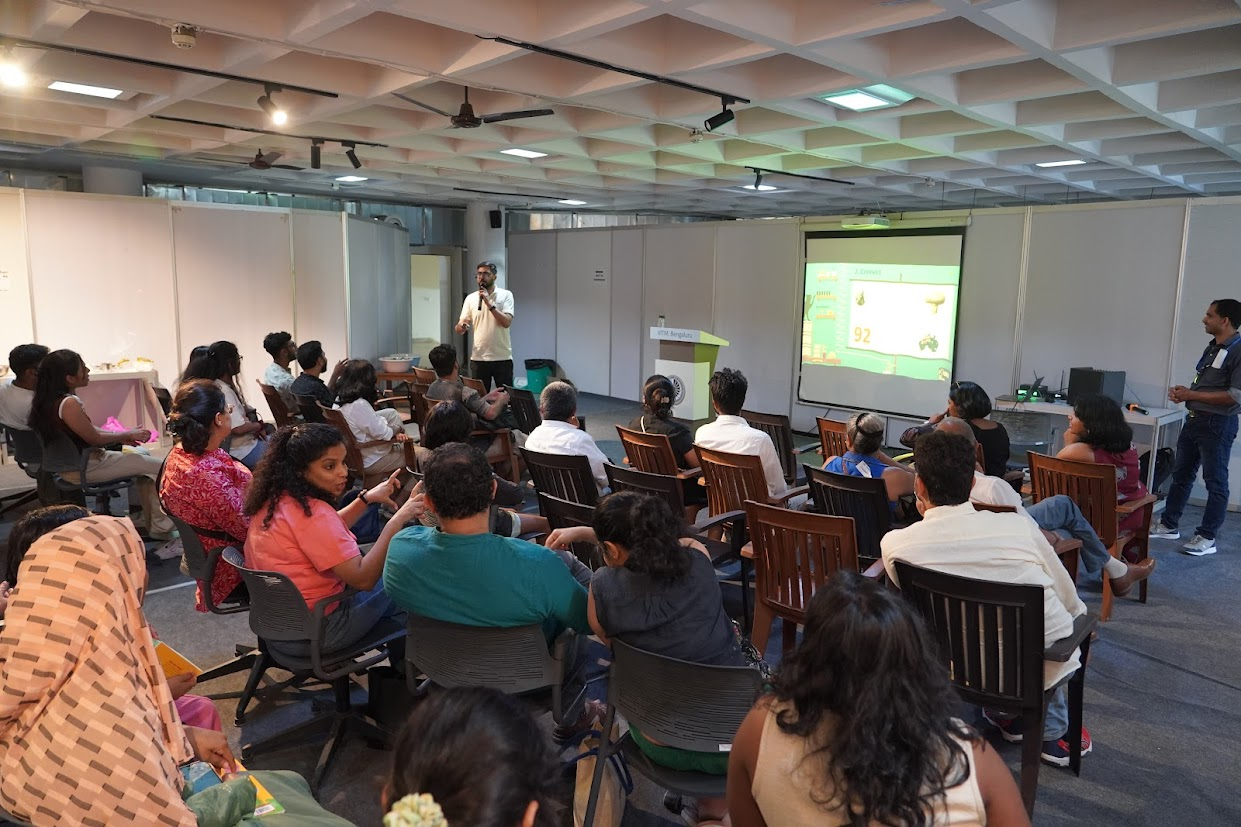
Having missed the first one, I claimed a front bench seat for Dr. Meghana Krishnadas's talk. Her lab studies how species coexist, which requires working at a time scale most of us never slow down enough to notice. Her presentation was refreshing and almost meditative!
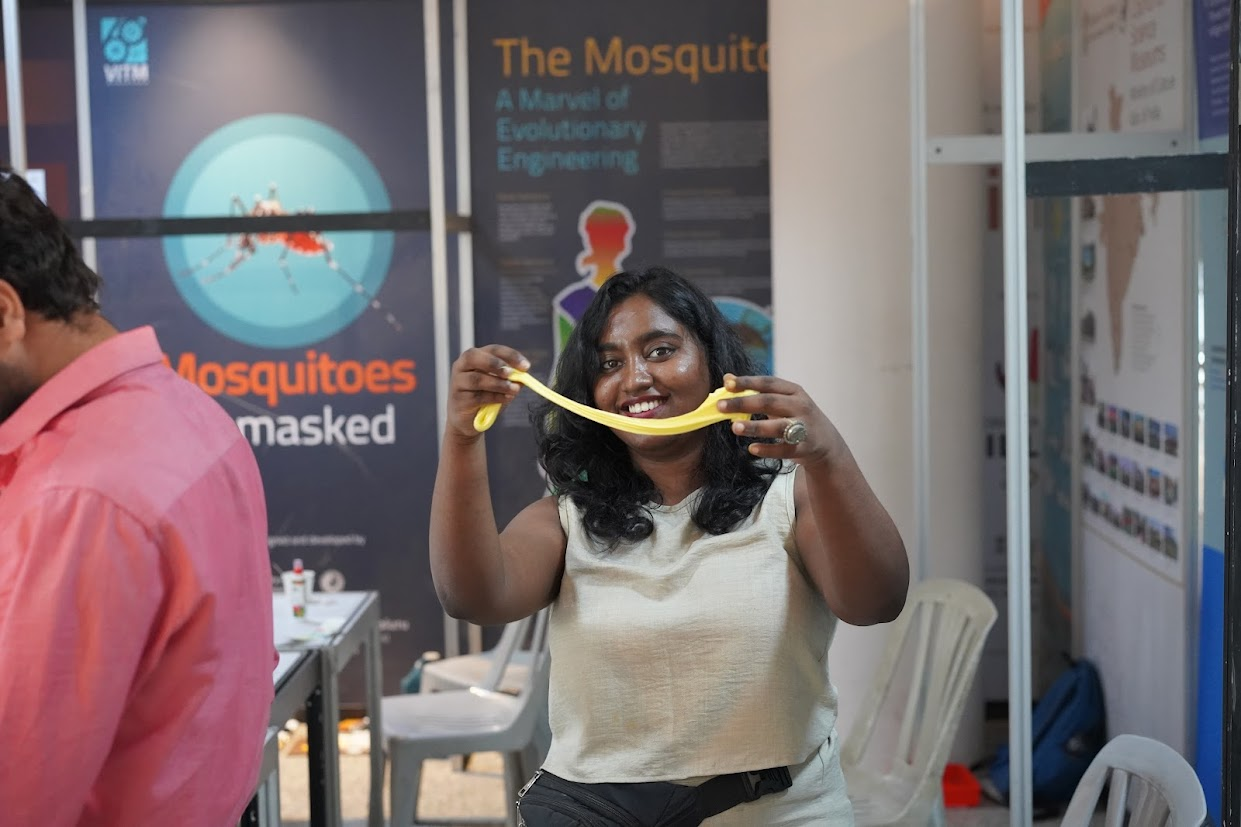
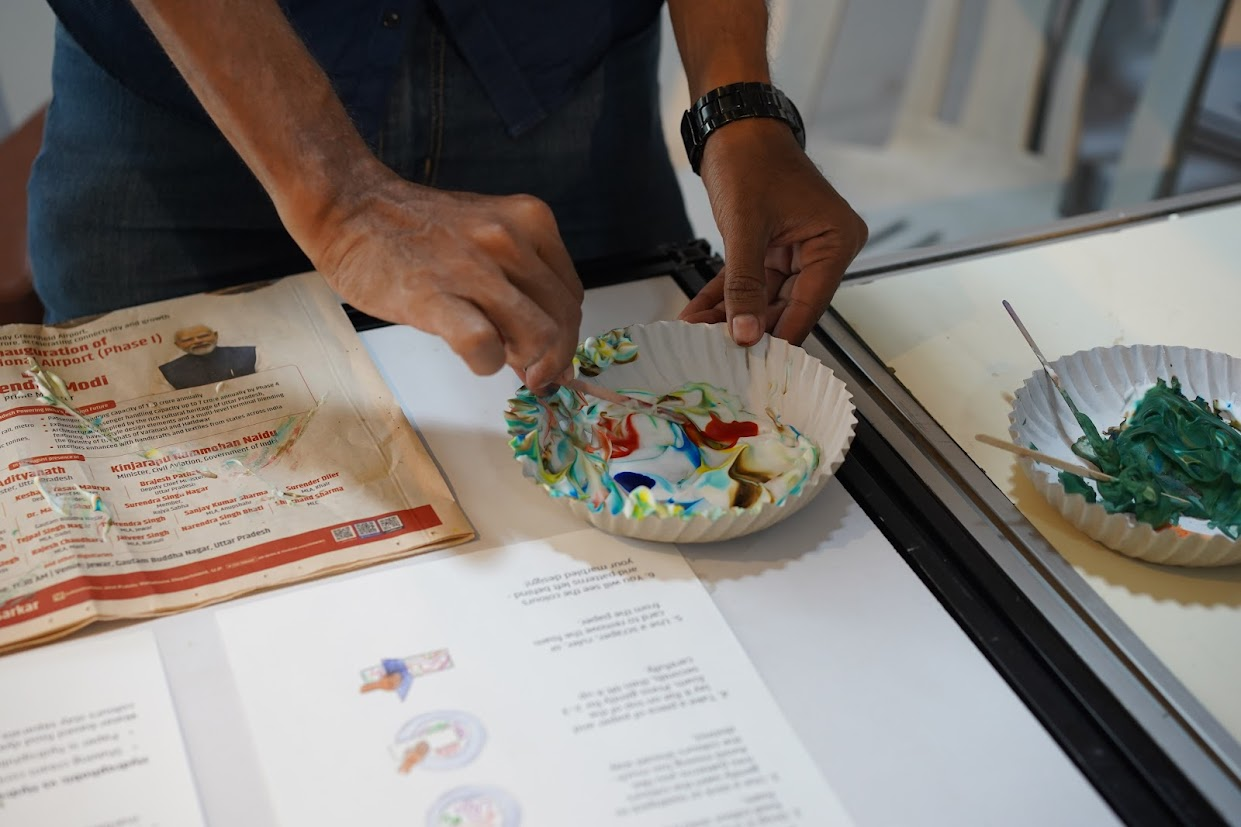
After grappling with the slow patience of ecology, I helped Dipti from PCL facilitate the messy and instant Kitchen Chemistry workshop! We saw how chromatography works by seeing the ink in a black sketchpen travel up filter paper; made marble art with shaving cream and food colouring, and made slime with fevicol and lens solution! Slime became a true experiment because it worked for some and didn't for others. As a group, we were figuring out how much lens solution to add so the borate ions in it link to the polymers in fevicol, and the right amount of baking soda for activation. I had to fight the urge to eavesdrop on unconference sessions that were happening in parallel, but the slime kept me glued (pun intended).
We closed with a feedback circle: one word each. Together these made their own little mosaic: fun, un-siloing, chiral, interactive, community!
Here’s a glimpse of the other tiles, the unconference topics that filled the day, that 80 folks participated in:
Scientific Temper and Rigor in society:
- Scientific thinking in daily life
- Philosophy of science, indian philosophies and scientific practices
- Immigration and Science
- How to identify and callout pseudoscience
- Continuation of “Spilled Secrets” by Dr. Ranjani
- Busy with finding new technology to make life easy
- Life Science and Deep Tech
- Agency and Synthetic Species
- Imagination → Most imp
- Astronomy for the Under-privileged
- Science Communication
- Science and Superstition
Bridging Art and Science
- The intersection of Origami and Maths
- Math Cartoons
- Science & Movies
- What can the Arts and Sciences learn from each other?
- Collaborating together: Science and Art
- How can we use art to communicate scientific concepts?
- Purpose of Education
I’m a transdisciplinary person, moving between worlds that don’t often talk to each other: hula hooping and science, data viz and movement arts, origami and maths. Finding people that are curious about the intersections of disciplines and spaces that allow you to be wrong and curious amidst some of the best in the fields, is serendipity. The nine Muses would’ve had a lot to muse about! I love that Mosaic is building a community where disciplines aren't separate. Come find your tiles at the next one!