
Written by Anaha Ravinarayan and Gokul Madhavan
We had such a fulfilling experience as a family and as science enthusiasts at the third Science Sante in the Science Gallery. While the two of us have attended both previous Santes, this was the first time we got to bring along our two older children (V, age 9, and A, age 6). And what a fantastic decision this turned out to be!
Right off the bat, we were greeted by yet another brilliantly innovative way for people to signal their passions and their self-identification in a fun, whimsical, and—in this iteration—mouth watering banana leaf sticker fest. V and A had a fun time debating which came first, the chicken or the egg. Eventually V managed to convince her brother that it had to be the egg because chickens evolved from other egg-laying dinosaurs (and besides, the question doesn’t specify that it has to be a chicken egg!).
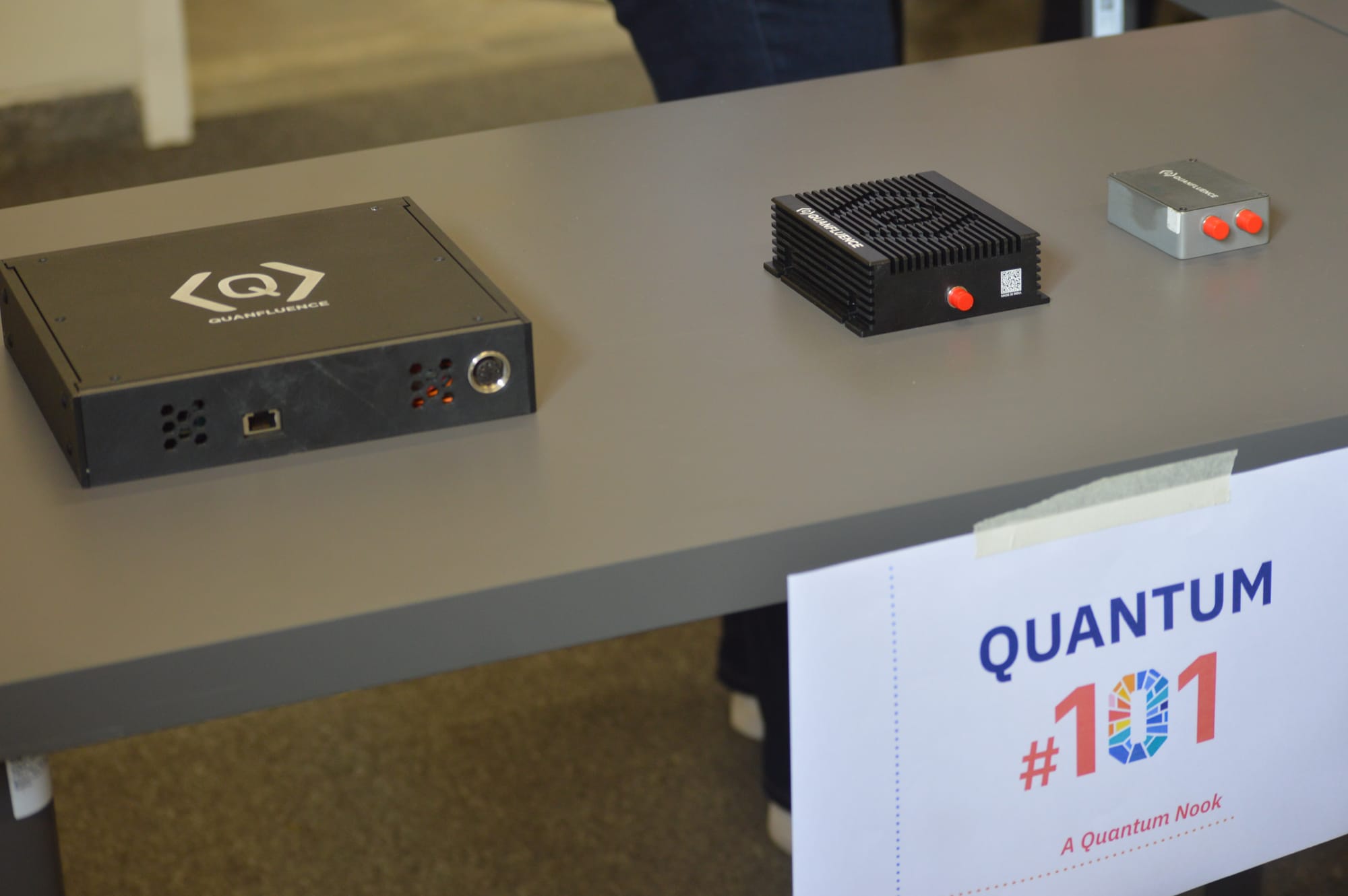
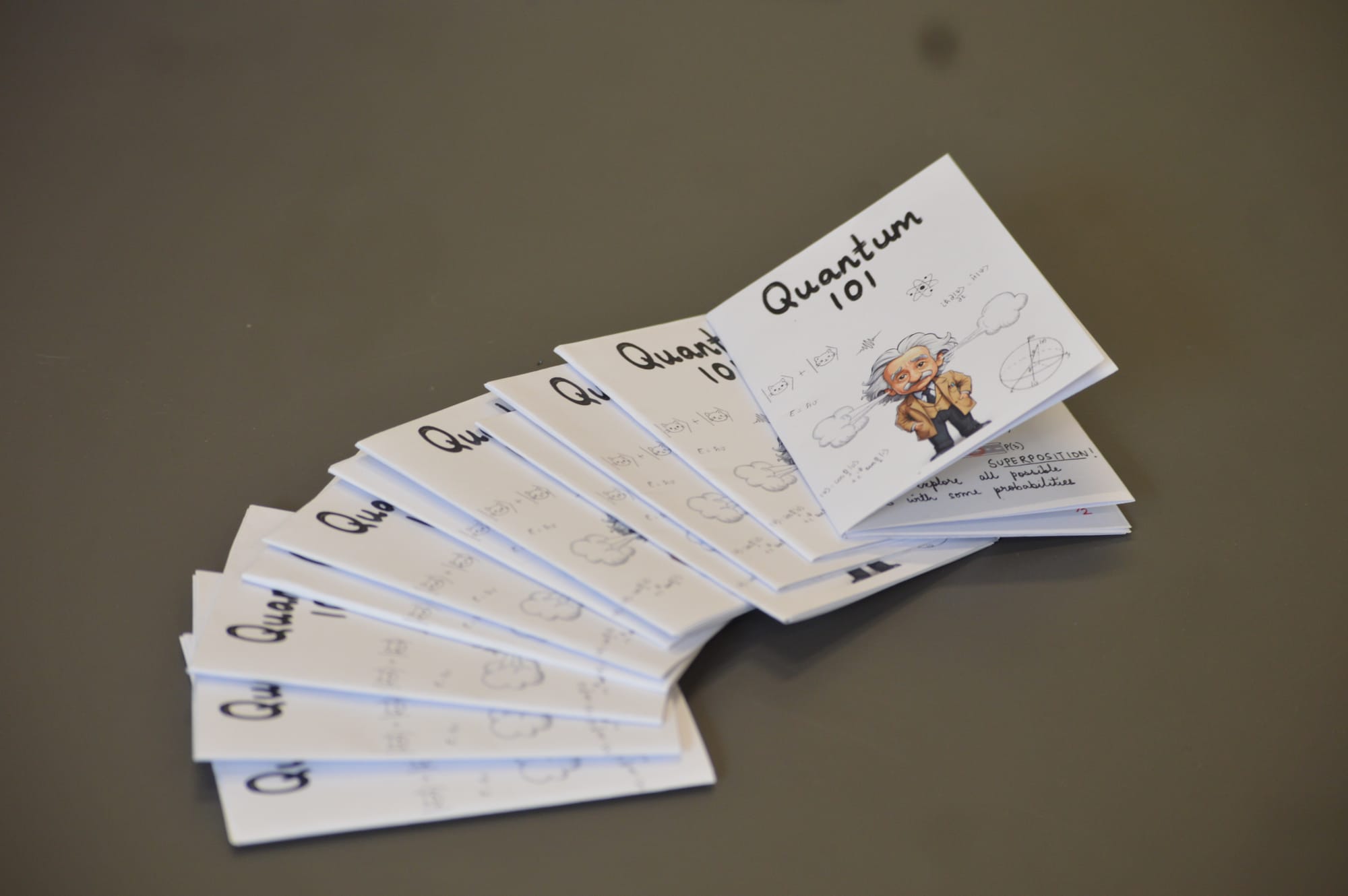
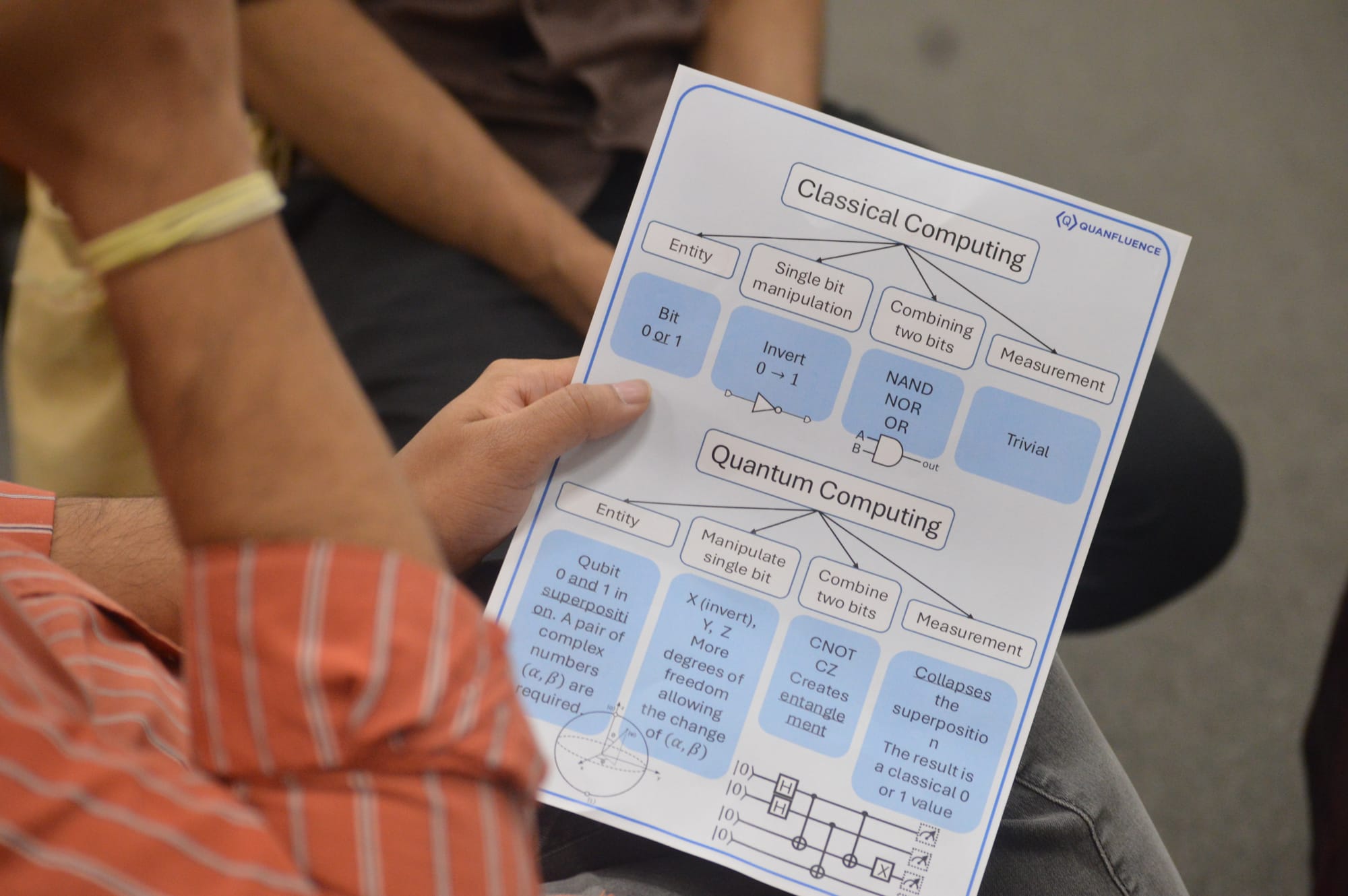
We then got to spend some time at Quanfluence’s booth. They had an excellent flyer introducing quantum computation to children and a small printed booklet on Quantum 101. Quanfluence also brought their devices (quantum random number generators) and explained how they work. It was amazing to learn that most things that we think of as “random” number generators (in programming and so on) are in fact only “pseudo-random”. This means that, at least in theory, you can predict what “pseudo-random” numbers might be generated by your computer. (Lottery number generators beware!) But Quanfluence has found a way to tap into the truest source of randomness in the universe: the random fluctuations of particles that occur in space. They combine these with lasers to generate a mathematically provable sequence of genuinely random numbers that are essential for a wide range of applications from cybersecurity to scientific and financial modeling and beyond!
Alas, owing to the pseudo-random vagaries of Bangalore traffic, we missed out on Prof. Shobhana Narasimhan’s talk. But in keeping with the generosity and openness that have so quickly become hallmarks of the Mosaic community, she actually spent some time with us talking to us about her research and showing us photos of the new materials she had developed. Thank you for your kindness, Prof. Narasimhan!
Next came the unconference where we joined a free-flowing conversation on figuring out new ways to introduce quantum mechanics and computation in new ways and to much younger audiences. As homeschooling parents who also run a center for gifted and accelerated learning in Jayanagar, we were delighted by this topic and by the willingness of experts who have spent their whole lives pushing the frontiers of human knowledge to find new ways to communicate these concepts to young enthusiasts while still maintaining scientific rigour. We have therefore gladly volunteered ourselves and our kids as guinea pigs for any pedagogical experiments when it comes to reimagining pedagogies for modern physics for young audiences.
Then came the talk on insects as new sources of nutrition.
After a delicious and very sumptuous lunch, we returned for one of Himadri’s fast-paced and always-exciting quizzes. Having just watched Arcana (without the kids, of course), we were kicking ourselves for not realising why a certain character had been so named (no spoilers!). Finally the kids had a fantastic time participating in the 3-minute thesis and sharing their ideas with a receptive and encouraging audience (they said that their favourite part of the day was how incredibly nice everyone was).
In conclusion, if there’s a deterministic fact in the universe, it is that we will keep coming back to Science Sante :)